 Tap to zoom
Dry Ejaculation, Delayed Ejaculation, and Retrograde Ejaculation: Causes and Treatment
Dry ejaculation, retrograde ejaculation, and delayed ejaculation are common male sexual disorders that can affect sexual satisfaction and fertility.
- نویسنده
- دکتر مهدی قاضی
- Published on
- June 26, 2026
- Reading time
- 5 min read
- Last updated
- Updated: June 27, 2026
Dry ejaculation refers to a condition in which no semen leaves the body during ejaculation, or the amount is very small.
This condition can occur for several reasons, including reduced semen production, blockage in the outflow pathway, or impaired coordination of the muscles and nerves around the urethra.
In some cases, instead of leaving the penis, semen flows backward into the bladder; this is called retrograde ejaculation.
Although dry ejaculation generally has little effect on a person’s overall health, men who are trying to have children may need special treatment or assisted reproductive techniques.
Delayed ejaculation, or delay in ejaculation, is another sexual disorder in which a person cannot ejaculate after a long time or even after considerable effort.
This problem can occur for various psychological or physical reasons and, in addition to causing dissatisfaction in the relationship, may lead to frustration and tension.
Factors that can affect delayed ejaculation include neurologic problems, aging, use of certain medicines, and psychological disorders. Treatment of delayed ejaculation depends on its cause and may include psychotherapy, changing medications, or using specific medicines to improve the ejaculation process.
Dry ejaculation
Dry ejaculation means that during ejaculation, semen does not leave the body or the amount is very small.
Dry ejaculation can occur because of several disorders in the male reproductive and genital system and, in some cases, can affect fertility.
Dry ejaculation may be caused by reduced semen production, obstruction in the ducts, nerve or muscle disorders, or semen flowing backward into the bladder, which is called retrograde ejaculation.
The scientific causes of this condition are explained below:
1. Inadequate semen production
One of the main causes of dry ejaculation is reduced semen production by glands of the male reproductive system, such as the prostate and seminal vesicles. This reduced production may be caused by systemic diseases, hormonal disorders, underactivity of the sex glands, or aging.
Research shows that low testosterone levels or other hormonal disorders can lead to inadequate semen production.
2. Obstruction in the semen outflow pathway
Obstruction in reproductive system ducts, such as the epididymal ducts, vas deferens, or urethra, can prevent semen from exiting.
This obstruction may be caused by chronic infections, cysts, or scars from previous surgery. Studies show that such obstructions can disrupt normal ejaculation and lead to dry ejaculation.
3. Lack of nerve and muscle coordination
Proper function of the nerves and muscles around the urethra and bladder neck is necessary for ejaculation.
Any defect in the coordination of these muscles and nerves can lead to impaired semen outflow. Neurologic disorders such as spinal nerve injury, diabetes, and degenerative neurologic diseases such as MS (multiple sclerosis) can cause problems with ejaculation.
4. Retrograde ejaculation
Retrograde ejaculation is one of the most common causes of dry ejaculation.
In this condition, instead of leaving the penis, semen flows backward into the bladder.
This usually happens because the bladder neck does not close completely during ejaculation.
The bladder neck is supposed to remain closed during orgasm so semen does not flow back into the bladder; any disruption in this function, such as nerve injury or the effects of some medicines, including alpha blockers used for prostate treatment, can cause retrograde ejaculation.
Research shows that some surgeries, such as prostate or bladder surgery, can also increase the risk of retrograde ejaculation.
Effects and complications of dry ejaculation
Dry ejaculation usually has no significant effect on physical health, and in many cases the person may not even notice it.
However, dry ejaculation can cause fertility problems because, in this situation, semen carrying sperm does not leave the body.
This may cause infertility, especially for men who want to have children.
Reverse or retrograde ejaculation
In retrograde ejaculation, semen flows toward the bladder during ejaculation instead of leaving the penis.
As a result, only a very small amount of semen comes out, or none leaves the body at all.
One clear sign of this condition is a change in urine color after sex, because semen that has entered the bladder mixes with urine and makes it cloudy.
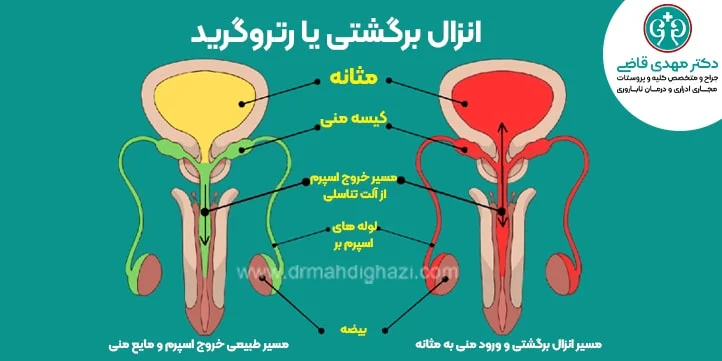
Causes of retrograde ejaculation
Reverse or retrograde ejaculation may occur for several reasons, including surgical injuries, chronic diseases such as diabetes and MS, and even the use of some medicines.
In many cases, this problem does not require specific treatment, but when it causes infertility, treatment methods and assisted reproduction can be used to achieve fertility.
1. Injury to the nerves and muscles of the bladder neck
Under normal conditions, the bladder neck closes during orgasm so semen does not flow back toward the bladder and instead exits through the penis.
However, any injury to the nerves or muscles around the bladder neck can impair the function of this valve and make it loose.
These injuries may be caused by surgery, neurologic diseases, or muscle disorders.
When the bladder neck does not close properly, semen loses its normal pathway and moves toward the bladder.
2. Prostate and bladder surgeries
Genital and urinary tract surgeries, especially prostate and bladder surgeries, can damage the nerve and muscle system in this area and lead to retrograde ejaculation. In particular, open surgery or transurethral prostate surgery increases the chance of retrograde ejaculation because these procedures can damage the nerves and muscles involved in closing the bladder neck.
3. Diabetes
Diabetes is a known factor that increases the risk of retrograde ejaculation. If diabetes is not controlled, it can damage the autonomic nerves that control bladder muscles. This nerve damage, known as diabetic neuropathy, impairs proper function of the bladder neck muscles and prevents normal semen outflow.
4. Multiple sclerosis (MS)
Multiple sclerosis (MS), a chronic inflammatory disease of the central nervous system, is recognized as a risk factor for retrograde ejaculation. In this disease, the nerves that control the muscles of the bladder neck may be damaged, disrupting normal ejaculation.
5. Use of alpha-blocker medicines
Alpha-blocker medicines, used to treat prostate enlargement and lower blood pressure, can relax the muscles of the bladder neck and therefore cause retrograde ejaculation. If retrograde ejaculation is caused by medication, changing the medication plan and consulting a doctor may help.
Treatment and management of retrograde ejaculation
For many people with retrograde ejaculation, this condition does not require specific treatment because sexual pleasure remains and, apart from temporary cloudy urine, it does not cause a specific physical problem. But if the person has infertility, medication treatment and assisted reproductive methods can be used:
Medication treatment: Medicines such as pseudoephedrine and midodrine can help strengthen bladder neck muscle function and help prevent semen from flowing back into the bladder.
Assisted reproductive methods: In cases where medication treatment is not effective, assisted reproductive methods such as IUI (intrauterine insemination) or IVF (in vitro fertilization) may be used. These methods help people with retrograde ejaculation achieve fertility.
Although retrograde ejaculation is considered an ejaculatory disorder, it can be well managed with medical consultation and, when needed, appropriate treatments, and its consequences can be overcome.
Delayed ejaculation
Delayed ejaculation, as a type of sexual disorder, occurs when a man has difficulty ejaculating during sexual activity or reaches ejaculation only after a long delay.
This condition can cause frustration, tension, and dissatisfaction for the person and their sexual partner and can reduce the quality of the relationship.
Delayed ejaculation may occur in all sexual situations or only in specific situations, such as sex with a partner.
Symptoms of delayed ejaculation
Delayed ejaculation is often associated with the following symptoms:
Long and tiring erection: The erection may continue for a long time, and the prolonged duration of sex may cause fatigue and discomfort for the person.
Inability to ejaculate despite a full erection: Despite a full erection and the feeling of needing to ejaculate, the person may be unable to experience orgasm and ejaculation.
Sex lasting more than 30 to 60 minutes: Sex may continue for a long time without orgasm and may last much longer than intended.
Causes of delayed ejaculation
Delayed ejaculation, defined as a delay in reaching ejaculation, can occur for various psychological and physical reasons and can affect a person’s sexual quality of life.
Psychological factors such as performance anxiety, stress, depression, and negative sexual experiences, especially in situations involving sex with a partner, can contribute to this disorder and delay ejaculation.
From a physical perspective, several causes such as spinal cord injury, neurologic diseases including multiple sclerosis (MS), and prostate or bladder surgeries can affect the nervous system of the genital area and cause this problem.
Aging also causes changes in the nervous and hormonal systems that may lead to delayed ejaculation.
On the other hand, some medicines are also recognized as important causes of delayed ejaculation.
Antidepressants, especially serotonin reuptake inhibitors, can delay ejaculation by reducing sexual sensitivity.
Blood pressure medicines such as beta blockers, antipsychotic medicines, muscle relaxants such as baclofen, and strong pain relievers such as methadone may also worsen this disorder by affecting the nervous system.
A correct understanding of the causes of delayed ejaculation can help the person and the doctor use appropriate treatment methods and necessary adjustments to improve quality of life and sexual relationships.
Psychological causes of delayed ejaculation
Psychological factors play an important role in the development and persistence of delayed ejaculation. These factors often act at an unconscious level and may delay ejaculation even when there is no clear physical problem.
Common psychological causes of delayed ejaculation are reviewed below:
1. Performance anxiety
Performance anxiety is one of the common causes of delayed ejaculation. This anxiety may arise from fear of not satisfying a partner sexually, worry about erectile dysfunction, or even pressure from past experiences. People with performance anxiety often focus too much on their performance and reactions during sex, and this excessive focus can unconsciously delay ejaculation.
2. Stress and psychological pressure
Stress from daily life, work, finances, or personal relationships can have a deep effect on sexual function. Under stress, the body enters a “fight-or-flight” state and stress hormone levels such as cortisol increase, which can disrupt normal body responses. As a result, ejaculation may be delayed or even stop. Life pressures or high sexual expectations can also create a cycle of anxiety and delayed ejaculation.
3. Depression
Depression directly affects sexual desire and function. Reduced interest in pleasurable activities, a common symptom of depression, can reduce sexual desire and delay ejaculation. In addition, some antidepressants, such as selective serotonin reuptake inhibitors (SSRIs), can delay ejaculation. These effects may be intensified in a person who is experiencing both depression and delayed ejaculation.
4. Past negative sexual experiences
Negative experiences, such as early sexual experiences associated with anxiety, shame, or even fear of pregnancy or sexually transmitted infections, can unconsciously lead to delayed ejaculation. Memories or mental concerns during sex may disrupt ejaculation. These negative experiences may remain in the subconscious and cause delayed ejaculation even when there is no physical problem.
5. Cultural and upbringing-related attitudes
A person’s cultural and educational attitudes toward sexual matters can also have an effect. People raised with strict beliefs or negative views about sex may experience inner conflicts that affect sexual function. These beliefs can lead to guilt or shame during sex and delay ejaculation.
6. Problems in the emotional relationship
Relationship problems such as lack of trust, unresolved conflicts, or poor communication between partners can also contribute to delayed ejaculation. Dissatisfaction in the emotional relationship may reduce the person’s desire to experience sexual pleasure or unconsciously delay ejaculation.
Diseases that cause delayed ejaculation
Diseases and physical injuries can also be causes of delayed ejaculation. Depending on the underlying cause, they can create varying degrees of delayed ejaculation, and identifying the underlying cause is very important in treating affected people.
Diseases that can cause delayed ejaculation are described below:
1. Nerve injuries
Nerve injuries caused by surgery, trauma, or neurologic diseases can disrupt nerve signal transmission between the brain, spinal cord, and genital areas. Diabetes is one of the main causes of nerve damage; by gradually damaging peripheral nerves, especially genital nerves, it can cause delayed ejaculation. Some surgeries, such as prostate or pelvic surgeries, can affect sexual nerves. Neurologic diseases such as multiple sclerosis (MS) and Parkinson’s disease are also among the causes that can lead to delayed ejaculation by affecting the central and peripheral nervous systems.
2. Hormonal problems
Hormonal disturbances can be one of the main causes of delayed ejaculation. Testosterone, as the main male hormone, plays a key role in sexual desire and sexual function. A reduced testosterone level, whether due to aging or specific medical conditions, can lead to reduced libido and delayed ejaculation. On the other hand, increased prolactin, a hormone secreted by the pituitary gland, may also disrupt the ejaculation process. Hyperthyroidism and hypothyroidism can also play a role because they affect metabolism and energy levels.
3. Prostate and genital tract diseases
Prostate-related diseases, including chronic prostatitis (inflammation of the prostate) and benign prostatic hyperplasia (prostate enlargement), can negatively affect the reproductive system.
These conditions cause swelling and inflammation in the prostate and, by putting pressure on nerves and blood vessels related to ejaculation, can delay ejaculation. In addition, prostate inflammation can cause pain and discomfort during ejaculation, which can itself delay ejaculation through nerve stress and impaired nervous system function.
4.Heart and circulatory system diseases
Poor cardiovascular function reduces blood flow to the genital organs and can lead to reduced sensitivity and delayed ejaculation. Conditions such as high blood pressure, atherosclerosis, and heart failure reduce blood flow in the body, which can interfere with ejaculation.
This problem is especially more common in older men with cardiovascular problems and is associated with taking longer to reach ejaculation.
5. Other factors (chronic diseases, alcohol, obesity)
Chronic diseases such as diabetes and kidney disease can affect overall health and the nervous system and cause delayed ejaculation.
Diabetes, through nerve damage and reduced sexual sensation, is a known factor in delayed ejaculation. Continuous alcohol use can also affect ejaculation by suppressing the nervous system and reducing genital sensation.
Obesity also increases the likelihood of delayed ejaculation because of its negative effects on hormone levels and the circulatory system.
Medicines that cause delayed ejaculation
Medicines that cause delayed ejaculation include several main drug groups, each affecting ejaculation for different reasons. The following describes the different drug categories and how they affect ejaculation:
1. Antidepressants, especially selective serotonin reuptake inhibitors, or SSRIs
Antidepressants, especially SSRIs such as fluoxetine, sertraline, paroxetine, and citalopram, are among the most common medication-related causes of delayed ejaculation. These medicines improve mood by increasing serotonin levels in the brain, but high serotonin also slows sexual response and delays ejaculation. This side effect is often used to treat premature ejaculation, but for people without that problem it can be unpleasant.
2. Antihistamine medicines
Antihistamines, especially types that enter the central nervous system, can cause dryness of mucous membranes and reduce sexual sensitivity. Medicines such as diphenhydramine and chlorpheniramine are among antihistamines that can cause delayed ejaculation. These medicines are usually prescribed for allergies, colds, and sleep problems, and by affecting histamine receptors they reduce sensitivity of sexual nerves and can increase the time to ejaculation.
3. Antipsychotic medicines
Antipsychotic medicines such as olanzapine, risperidone, and clozapine are prescribed for psychiatric disorders such as schizophrenia and bipolar disorders. Because they affect the brain’s dopaminergic system, they can reduce sexual desire and sexual sensitivity and cause delayed ejaculation.
Dopamine has a key role in sexual arousal, and lowering it reduces desire and the ability to ejaculate.
4. Blood pressure medicines (antihypertensives)
Antihypertensive medicines, especially beta blockers such as atenolol and metoprolol, can reduce blood flow to the genital organs by lowering blood pressure and cause delayed ejaculation. Some ACE inhibitors and diuretics may also have a similar effect.
These medicines are often prescribed to lower high blood pressure, reduce cardiac workload, and prevent heart complications, but they may have side effects on sexual function.
5. Narcotic drugs and strong pain relievers (opioids)
Opioid pain medicines such as morphine and oxycodone, used for severe and chronic pain, affect the central nervous system and can cause delayed ejaculation.
By blocking pain receptors and reducing nervous system sensitivity, these medicines reduce sexual desire and delay ejaculation. Long-term use can also create drug tolerance and cause more problems for sexual function.
6. Antiseizure medicines
Antiseizure medicines such as gabapentin and phenytoin are used to treat epilepsy and other seizure disorders, but they can affect the central nervous system and reduce sexual sensitivity. By reducing nerve signal transmission, antiseizure medicines increase the time needed for arousal and ejaculation and may cause delayed ejaculation.
7. Muscle relaxant medicines
Muscle relaxants such as baclofen, tizanidine, and cyclobenzaprine, prescribed for muscle spasms and some neurologic and muscular diseases, can also cause delayed ejaculation. By reducing excitability of the central nervous system and relaxing muscles, these medicines reduce sexual sensitivity and sensation in the genital area.
Baclofen specifically reduces neural activity by inhibiting the GABA neurotransmitter in the spinal cord and, in some people, causes reduced sexual desire and delayed ejaculation.
Tizanidine and cyclobenzaprine can also have similar effects on ejaculation in some patients by suppressing the central nervous system and reducing sensitivity.
Long-term use of these medicines can have greater effects on sexual function and lead to delayed ejaculation.
Treatment of delayed ejaculation
Treatment of delayed ejaculation can sometimes be challenging because in some cases correcting the underlying cause may be difficult.
Treatment methods for delayed ejaculation based on the underlying cause are described below:
1. Medication treatments
Medication treatments for delayed ejaculation often help change brain chemistry so the ejaculation process becomes easier.
Some of these medicines include:
Dopamine agonists: Medicines such as amantadine and bromocriptine can help speed ejaculation by stimulating dopamine receptors. Dopamine plays an important role in sexual arousal, and increasing its level may make ejaculation faster.
Certain antidepressants: In some cases, medicines such as bupropion, which has a more stimulating effect on the nervous system, can help with faster ejaculation. These medicines help facilitate ejaculation by increasing dopamine and norepinephrine.
Phosphodiesterase-5 (PDE5) inhibitors: Medicines such as sildenafil and tadalafil, which are mostly used to treat erectile dysfunction, can be effective as an adjunct in treating delayed ejaculation because they improve blood flow to the genital organs and increase sensitivity.
2. Psychotherapy and counseling
If delayed ejaculation is due to psychological problems, counseling and psychological treatments can help the patient:
Cognitive behavioral therapy (CBT): This method helps the person identify and manage thought patterns or anxieties that may be causing delayed ejaculation.
Individual and couples psychotherapy: Sometimes communication problems, stress, or anxiety can worsen delayed ejaculation. Psychotherapy can help reduce stress and strengthen the emotional and sexual relationship between partners.
3. Adjusting current medicines
If delayed ejaculation is caused by certain medicines, changing or reducing the dose may help. Medicines such as antidepressants, antipsychotics, and some pain relievers may cause delayed ejaculation. Working with a doctor, the doses can be adjusted or other medicines substituted to reduce the problem.
4. Behavioral and physical techniques
Behavioral techniques can also be useful for helping ejaculation occur sooner:
Increasing focus on sexual pleasure: Some exercises aim to increase focus on sexual sensation and pleasure instead of anxiety and worry. These methods may include relaxation exercises, meditation, and increased mental focus.
Stimulating more sensitive areas: In some cases, increasing stimulation of more sensitive areas by changing position or directly stimulating the area may help.
5. Lifestyle changes
Lifestyle changes can help improve delayed ejaculation. Reducing alcohol use, stopping illicit drugs, and reducing or stopping smoking can improve sexual function. Adequate sleep and regular physical activity can also improve overall health and sexual health.
Summary
Ejaculatory disorders such as dry ejaculation and delayed ejaculation are common challenges among men and can affect quality of life and self-confidence. These problems arise from diverse physical, psychological, hormonal, and medication-related factors and often have a complex relationship with overall health.
Dry ejaculation refers to a condition in which semen does not leave the body adequately or at all, and it may result from problems such as retrograde ejaculation, neurologic disorders, diabetes, or even prostate surgery.
This condition, in addition to psychological and physical effects, can lead to fertility problems and requires attention and specialized treatment.
Delayed ejaculation is another common problem in which the person cannot ejaculate after a long time or significant effort.
This problem can also have psychological roots such as anxiety, stress, or negative sexual experiences, or it can occur because of certain medicines or physiologic factors.
This disorder can in turn cause tension in the relationship and reduce the person’s quality of life.
Treatment strategies for these disorders depend on their underlying cause. Medication approaches include changing or adjusting contributing medicines, using medicines that improve sexual desire, or phosphodiesterase-5 inhibitors.
Psychotherapy is also very effective in many cases, especially when delayed ejaculation is caused by psychological factors. These methods include couples counseling, cognitive behavioral therapy, and anxiety-reduction techniques that can have positive effects on treatment by improving emotional communication and reducing psychological tension.
Lifestyle changes such as reducing alcohol use, avoiding illicit drugs, increasing physical activity, getting enough sleep, and healthy nutrition are also recognized as helpful factors for improving ejaculation problems.
On the other hand, awareness of these problems, careful evaluation of their causes by specialist physicians, and performing necessary tests are the first steps toward appropriate and effective treatment.
Behavioral techniques and relaxation-related exercises can also help control and manage these problems more effectively.
In short, accurately identifying the causes of ejaculatory disorders and receiving treatment tailored to those causes can improve sexual function and increase a person’s satisfaction with their sex life.
Finally, it should be noted that although these disorders may seem discouraging, they are largely treatable and manageable with specialist care and adherence to medical recommendations, and people can use an informed, scientific approach to achieve a healthy and satisfying sex life.
Frequently asked questions
Actions & related links
Doctors for this topic in Mashhad
See all doctors: Best Doctors for Premature Ejaculation & ED in Mashhad




About the author

Urologic Surgeon
دکتر مهدی قاضی, Urologic Surgeon in Mashhad. Articles on this site are written and reviewed under the supervision of the Urology Building's physicians.
View profile & bookRelated articles
All articlesWhat Is Polycystic Kidney Disease? (Fetal and Adult PKD)
دکتر مهدی قاضی · June 26, 2026
What Is a Renal Cortical Cyst? Symptoms, Diagnosis, and Treatment
دکتر مهدی قاضی · June 26, 2026
Kidney Transplant: Cost, Blood Type Compatibility, and Surgical Method
دکتر مهدی قاضی · June 26, 2026
What Is Pyelonephritis? Kidney Infection Symptoms, Diagnosis, and Treatment
دکتر مهدی قاضی · June 26, 2026
Comments
8 comments