 Tap to zoom
What Is Dialysis and How Is It Performed?
- نویسنده
- دکتر مهدی قاضی
- Published on
- June 26, 2026
- Reading time
- 5 min read
- Last updated
- Updated: June 26, 2026
Dialysis is a process that takes over blood filtration when the kidneys cannot do it, removing toxins and excess fluid from the body. The doctor reviews several factors, including the creatinine level and glomerular filtration rate (GFR), to decide whether you need dialysis. Therefore, the time to start dialysis does not depend only on the creatinine number, because that number is affected by factors such as age, weight, and muscle mass.
In the rest of this article, we explain how doctors determine the need for dialysis and whether it is temporary or permanent. We also review why dialysis is needed, how it works, and the steps of its different methods.
What does dialysis do?
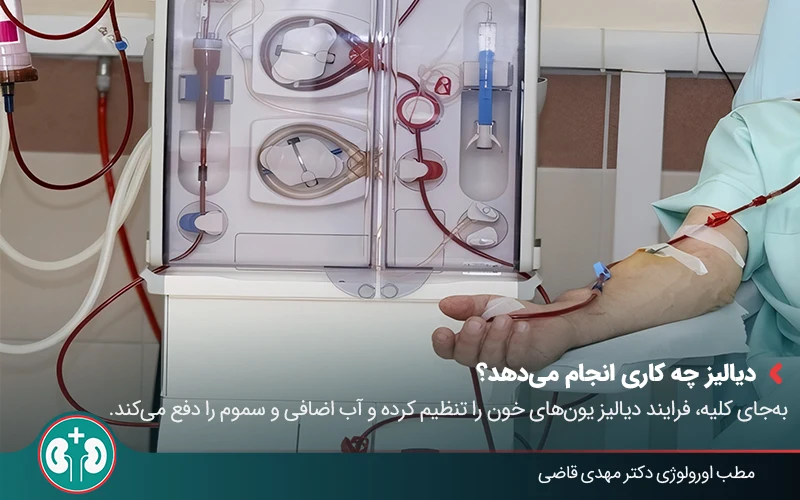
Kidney dialysis is a treatment that works as a replacement for normal kidney function. When the kidneys cannot filter blood, remove toxins and excess water, or regulate blood electrolytes, this method helps support the body.
In blood dialysis, or hemodialysis, blood is removed from the body and filtered by special machines so waste products are cleared. It is important to know that dialysis is a supportive treatment that helps the patient live better, but it does not mean a definitive cure for kidney diseases.
Who needs dialysis?
In general, dialysis becomes necessary when a person develops kidney failure, meaning kidney function has fallen severely and the body can no longer remove toxins and waste products from the blood. Below are the groups who may need dialysis in more detail:
People with chronic kidney failure: when the kidneys permanently fail, meaning end-stage kidney disease, and kidney function falls below 15 percent of normal capacity.
People with acute kidney injury (AKI): when the kidneys suddenly fail, usually because of severe illness, poisoning, or injury. Acute kidney injury may be temporary.
How do I know if I need dialysis?
In general, if your kidneys can no longer remove toxins and waste products from the blood, you may develop the following dangerous symptoms:
Fluid buildup in the lungs, or pulmonary edema
High potassium level, which can be dangerous for the heart
Confusion and difficulty concentrating because of toxin buildup, or encephalopathy
Nausea and vomiting, especially in the morning
Severe fatigue and ongoing weakness
Body swelling, especially in the legs, ankles, and face
Keep in mind that deciding whether dialysis is needed is the doctor’s responsibility, based on clinical symptoms and blood tests.
The relationship between blood protein and the need for dialysis
One important sign doctors consider when assessing the need for dialysis is the amount of protein loss. When the kidneys are damaged, their ability to filter blood and prevent protein loss decreases.
This condition is known as proteinuria, in which proteins, especially albumin, are lost through the urine. A urine test can measure the amount of protein being lost and show the severity of kidney damage.
The relationship between blood creatinine and the need for dialysis
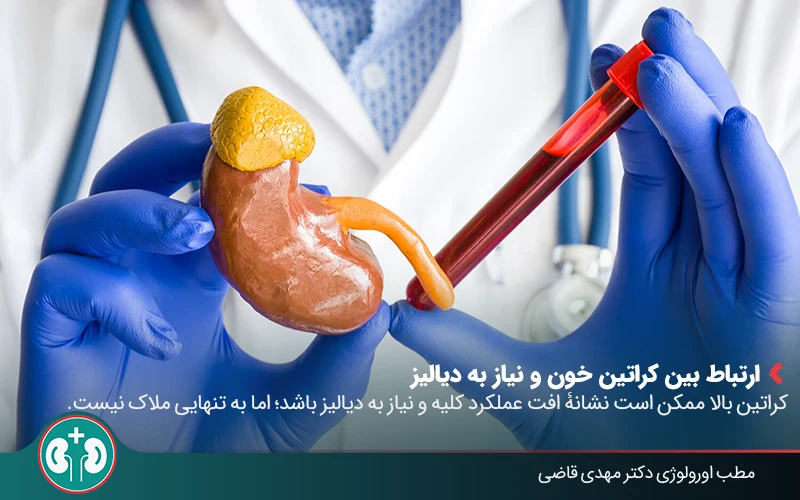
Creatinine is a waste product produced by muscles, and healthy kidneys remove it. The blood creatinine level is an important marker for evaluating kidney function. This number helps show how the kidney is filtering this substance and whether dialysis is needed.
However, creatinine alone cannot determine whether a person needs dialysis. Normal blood creatinine depends on age and weight. In addition to blood creatinine, doctors also consider the glomerular filtration rate (GFR) when assessing kidney function.
In this situation, if GFR is below 15 and symptoms such as nausea and confusion are also present, the doctor may determine that dialysis is necessary.
Can starting dialysis be delayed?
The good news is that in the early stages of chronic kidney failure, stages 3 and 4, there are still opportunities to manage the disease and prevent progression to the final stage and the need for dialysis.
Note: herbal treatments can never replace dialysis. Also, in end-stage kidney failure or acute kidney failure, dialysis is fully necessary and cannot be delayed.
Some strategies that may help delay dialysis include:
Avoiding pain relievers such as ibuprofen and naproxen;
Following an appropriate diet to lower creatinine level;
Proper management of blood pressure and diabetes;
Quitting smoking;
Weight loss.
Main types of dialysis: which method is right for you?
For treatment of kidney failure, there are two main types of dialysis: hemodialysis and peritoneal dialysis. Both have the same goal, clearing toxins and waste products from the blood, but each is performed differently.
Choosing the right dialysis method depends on your condition, personal preferences, and medical circumstances. Below, you will learn about both types of dialysis.
Hemodialysis: blood cleaning outside the body
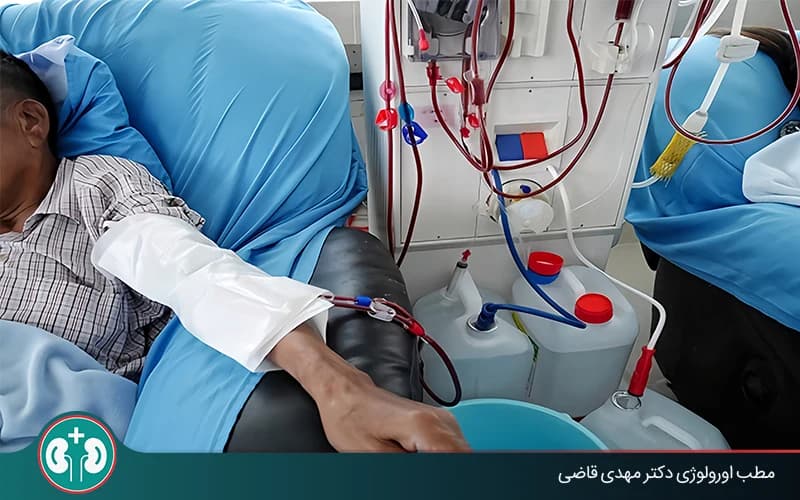
Hemodialysis is one of the most common dialysis methods. In this method, blood is sent by a pump to a machine and passes through a special filter so toxins and waste products are removed.
The cleaned blood then returns to the body. This method is usually performed three times a week, each session lasting 3 to 4 hours.
Types of vascular access, or ways to connect to the machine
To perform hemodialysis, a suitable path for access to the bloodstream must be created. This access may be permanent or temporary, and the choice depends on your physical condition and the time remaining before dialysis starts.
Permanent accesses are created surgically and should be made 2 to 3 months before dialysis starts, so the vessels have enough time to heal and tolerate the pressure of dialysis needles.
1. Fistula (permanent): In this method, an artery and a vein are connected to create a natural and suitable pathway for dialysis.
2. Graft, or artificial vessel (permanent): In this method, instead of directly connecting the vessels, an artificial tube is used to connect an artery and a vein.
3. Temporary access with a catheter: A catheter, sometimes called a Shaldon catheter, is a tube placed in the neck or chest. It is a fast but temporary access method and is usually used when permanent access is not ready yet or urgent dialysis is needed. A catheter has a higher infection risk and weaker performance than a fistula or graft.
Note: Permanent methods are more suitable for repeated dialysis, and because they are created permanently in the body, they have a lower infection risk than temporary methods. If there is not enough time to create and prepare these accesses, a temporary method may be needed.
Where hemodialysis is performed
Hemodialysis can be performed in two different settings:
In a treatment center: treatment is performed under nurse supervision in dialysis centers and hospitals. This method is usually done on a fixed schedule and in a group setting.
At home: Some patients can perform dialysis at home after the necessary training. In this case, the machines are smaller and the schedule is more flexible.
Steps: how the dialysis machine works
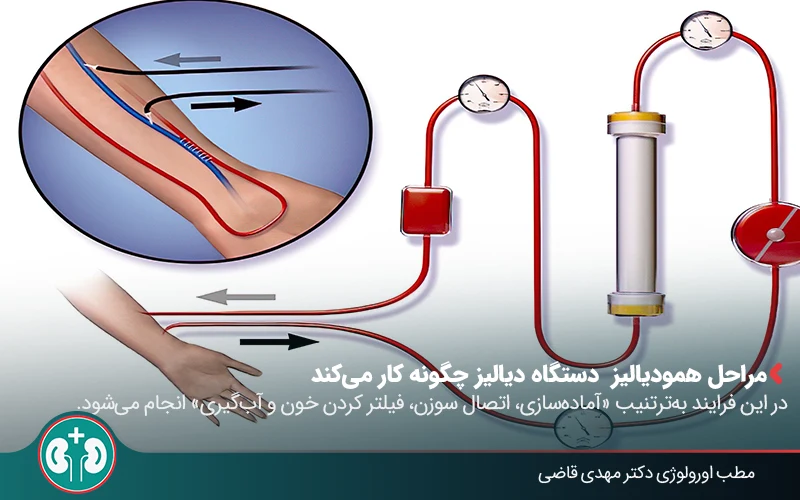
Hemodialysis filters blood through several steps. These steps are as follows:
1. Preparation: First, the nurse checks your weight and blood pressure. Then the access site, which may be a fistula, graft, or catheter, is cleaned and local anesthesia is injected in that area.
2. Connection (needle insertion): Then two needles are inserted into the access site; one needle carries blood from your body to the machine, and the other returns filtered blood to your body.
3. Filtering in the dialyzer: blood enters the dialysis machine and passes through filters with hollow fibers. At this stage, dialysis fluid separates toxins and waste products from your blood.
4. Fluid removal (ultrafiltration): at the same time, the machine removes excess water from your blood. This step is known as dry dialysis, in which excess body fluids are removed.
5. End: At the end of treatment, the nurse removes the needles from your body and dresses the site. Then the specialist checks your weight to reach your dry weight, meaning the weight you should have after excess fluid has been removed.
Signs that a dialysis fistula has stopped working
A dialysis fistula may fail or develop problems over time. Signs of these problems include:
No vibration or thrill felt under the hand;
Redness or pus because of fistula infection;
Prolonged bleeding after needle removal.
Peritoneal dialysis: cleaning inside the body
In peritoneal dialysis, blood is cleaned using the abdominal lining, or peritoneum, as a filter. In this method, no blood removal or needles are needed. The steps are simply as follows:
1. A special fluid enters the abdomen through an abdominal tube, or catheter. At this stage, you may feel that your abdomen is full.
2. The fluid remains in your abdomen for about 4 to 6 hours, and the sugar in it draws toxins and excess body water from the blood.
3. After this time, the used fluid drains into a drainage bag.
4. New fluid immediately enters the abdomen, and the process repeats.
Peritoneal dialysis is a home dialysis method that allows you to receive treatment at home and continue daily activities more easily.

Continuous renal replacement therapy (CRRT)
Continuous renal replacement therapy (CRRT) is a 24-hour emergency dialysis method that works slowly. It is used for critically ill patients who are in a coma or have acute kidney injury (AKI) with hemodynamic instability. This method is used only in the hospital intensive care unit (ICU).
CRRT slowly regulates fluids and electrolytes and keeps the patient’s blood pressure stable. Continuous renal replacement therapy has fewer cardiovascular complications than conventional dialysis because fluid is removed more slowly.
Comparison of hemodialysis and peritoneal dialysis
Continuing the comparison of dialysis methods, we now review the two main types: hemodialysis and peritoneal dialysis.
Feature | Hemodialysis | Peritoneal dialysis |
|---|---|---|
Location | Usually in a clinic or hospital | Can be done at home |
Complications | Possible cardiovascular disease risk | Higher infection risk because of peritoneal inflammation (peritonitis) and catheter use |
Patient freedom | Dependence on treatment centers | Can be done at home |
Cost of dialysis | Higher cost because of equipment and specialized staff | Lower cost, especially because it can be done at home |
How much does kidney dialysis cost?
The cost of kidney dialysis depends on several factors, including:
1. Type of treatment center: dialysis in public centers usually costs less, while private self-pay dialysis is more expensive.
2. Dialysis method: hemodialysis usually costs more than peritoneal dialysis.
3. Treatment location: home dialysis, especially peritoneal dialysis, costs less than treatment in medical centers.
4. Dialysis insurance coverage: many supplemental insurance plans cover dialysis costs.
5. Benefits for special-disease patients: patients with chronic kidney failure are covered by the Special Diseases Foundation and receive specific insurance and treatment benefits that reduce costs.
Preparing for dialysis
Preparation for dialysis includes several steps that should be considered before starting treatment. These steps help you prepare for treatment in the best possible way:
The doctor performs the necessary tests to check that dialysis is effective enough, then adjusts treatment parameters to optimize therapy.
To connect to the dialysis machine, you need a small surgery, usually performed several weeks before treatment begins.
If you have chosen home dialysis, you need 4 to 8 weeks of training to learn how to perform dialysis at home.
At this stage, you should be ready for changes in your life and, if needed, use psychological counseling to cope with worries and stress.
The patient’s condition after dialysis
After dialysis, you may experience several symptoms that vary from person to person. Some of these symptoms decrease over time, but they can be unpleasant at first:
Severe fatigue and a feeling of depleted energy;
Mild headache or nausea that decreases over time;
Dizziness, which is the most common complication during dialysis;
Fever and chills because of infection;
Feeling cold and shivering because of a reaction to medication or low blood pressure, which requires assessment for infection;
Leg muscle cramps, usually because of rapid fluid removal;
Itching, possibly because of high phosphorus level;
Sleep problems such as sleep apnea or restless legs.
What should you do after dialysis?
After dialysis, following a few important points is necessary to improve how you feel and prevent problems:
Rest completely and avoid heavy activity immediately after dialysis
Check the fistula and make sure bleeding has stopped and the dressing is clean
Wear loose clothing and avoid sleeping on the affected arm
Use a blanket and warm clothing if you feel chills after dialysis

Dialysis complications
Dialysis may be associated with problems and complications that can significantly affect your quality of life. These complications can occur because of physical and psychological changes caused by ongoing treatment:
Depression and anxiety;
Cardiovascular problems;
Risk of infection at the vascular access site and peritonitis.
The relationship between dialysis and kidney stones
In patients with advanced kidney failure, imbalance of blood minerals such as calcium and phosphorus is common. For this reason, some people think dialysis patients are more prone to stones, but there is not enough evidence to prove this. In some studies, kidney stone occurrence in dialysis patients has been reported at about 10 percent, which is nearly similar to the general population. (Source)
On the other hand, many dialysis patients become oliguric or anuric, meaning their urine becomes very low or stops completely. In these people, the chance of kidney stone formation is low, because stone formation in the urinary tract requires urine and dissolved substances in it.
Effects of dialysis on quality of life
Dialysis can create limitations in your daily activities. However, with planning and cooperation with the medical team, you can manage all of the following issues:
Needing to eat more protein-rich foods such as chicken, fish, and eggs, especially for peritoneal dialysis patients because protein is lost from the body in this method
Restriction of sodium (salt), potassium (bananas, citrus fruits, potatoes), and phosphorus (dairy products, soft drinks)
Need to find a dialysis center at the destination when traveling
Strict restriction of water, soup, and watery fruits
Need to attend a dialysis center at scheduled times
Dialysis complications in older adults
Kidney dialysis can cause more low blood pressure in older adults. In particular, excessive fluid removal without adequate toxin clearance can worsen this problem.
For this reason, peritoneal dialysis may be a better option for older adults, because it causes fewer hemodynamic fluctuations and less low blood pressure. However, the choice of dialysis method should be individualized and based on these parameters:
Cognitive status
Family support
Ability to perform care
Complications of dialysis through the neck
With dialysis through a neck catheter, you may face a risk of infection because germs can enter the blood. This method should be used only temporarily until the fistula is fully ready.
What is the life expectancy of dialysis patients?

Life expectancy in dialysis patients is not the same for everyone and depends on several factors.
On average, dialysis patients live 5 to 10 years with the benefits of kidney dialysis; however, with appropriate care, some patients have lived well for 20 or even 30 years. This shows that longer survival is possible with proper care and a treatment plan. (Source)
Is there an alternative to dialysis?
If dialysis is not sufficient, kidney transplantation is the best definitive treatment option. Kidney transplantation allows patients to live without dialysis. People with a transplanted kidney usually live longer than those who continue dialysis.
Summary
Dialysis is a way to manage kidney failure; it is not the end of life. In the early stages of kidney failure, you may be able to delay dialysis with a suitable diet and lifestyle, but when the doctor determines that dialysis is needed, you should proceed with it. Delaying dialysis can lead to emergency dialysis through the neck.
Dialysis can be performed as hemodialysis or peritoneal dialysis, and it can be done at home or in specialized centers. Finally, remember that dialysis is not always permanent, and with kidney transplantation your body can regain normal kidney function.
Frequently Asked Questions
Actions & related links
Doctors for this topic in Mashhad
See all doctors: Best Urologists in Mashhad




About the author

Urologic Surgeon
دکتر مهدی قاضی, Urologic Surgeon in Mashhad. Articles on this site are written and reviewed under the supervision of the Urology Building's physicians.
View profile & bookRelated articles
All articlesWhat Is Polycystic Kidney Disease? (Fetal and Adult PKD)
دکتر مهدی قاضی · June 26, 2026
What Is a Renal Cortical Cyst? Symptoms, Diagnosis, and Treatment
دکتر مهدی قاضی · June 26, 2026
Kidney Transplant: Cost, Blood Type Compatibility, and Surgical Method
دکتر مهدی قاضی · June 26, 2026
What Is Pyelonephritis? Kidney Infection Symptoms, Diagnosis, and Treatment
دکتر مهدی قاضی · June 26, 2026
Comments
0 comments
No comments yet. Be the first to share your thoughts.