 Tap to zoom
Cystoplasty Surgery: Steps, Recovery, and Key Points
Cystoplasty, or bladder augmentation, is a complex surgery that increases bladder capacity and lowers bladder pressure in selected patients.
- نویسنده
- دکتر مهدی قاضی
- Published on
- June 26, 2026
- Reading time
- 5 min read
- Last updated
- Updated: June 26, 2026
Bladder enlargement surgery with cystoplasty, also known as bladder augmentation, is a specialized and complex procedure used to improve bladder function and increase its capacity.
This surgery is recommended for people whose bladder is not large enough or has lost its elasticity.
Problems such as urinary incontinence, increased pressure inside the bladder, and reflux of urine toward the kidneys are among the issues that can be treated with this surgery.
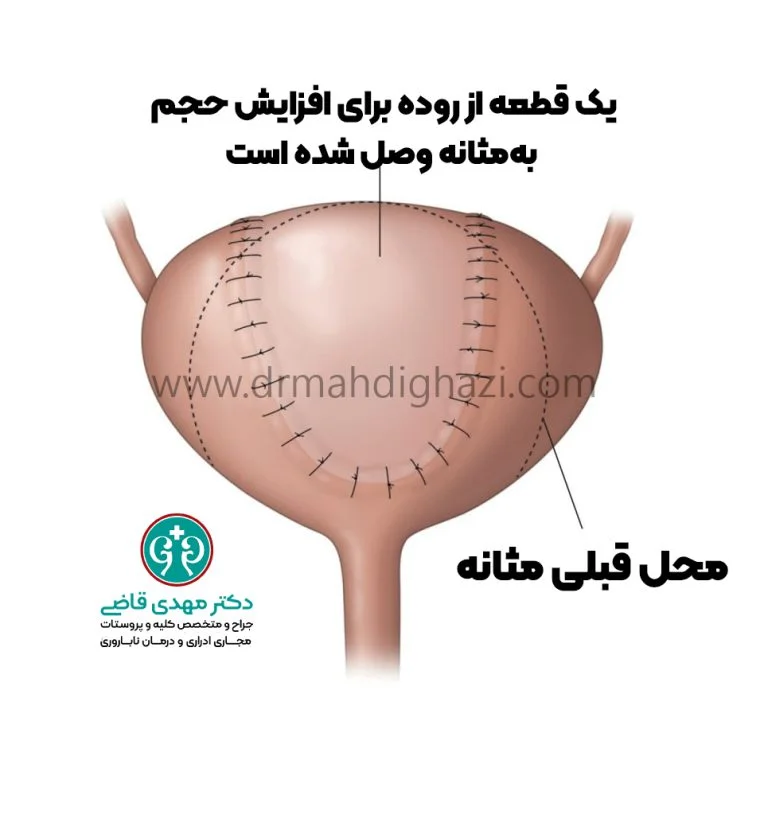
The surgical process involves using portions of the intestine or stomach to increase the bladder volume.
What is the bladder and how does it work?
The bladder is a balloon-shaped organ in the lower abdomen whose main job is to store urine. The pelvic floor muscles hold the bladder in place.
When the bladder is empty, its muscles are relaxed, and as the bladder fills, nerve signals are sent to the brain to report the need to urinate.
The brain tells the bladder muscles to contract. These contractions push urine out of the bladder, and urine then leaves the body through the urethra. The urethra has muscles called sphincters that help keep it closed and prevent urine leakage.
When the bladder contracts, these sphincters open and allow urine to pass out.
Reasons for bladder augmentation
In some people, the bladder does not have enough capacity to store the urine produced by the kidneys, which can cause urinary incontinence. In other cases, loss of bladder muscle elasticity increases the pressure inside the bladder, and this increased pressure can prevent proper emptying of urine.
Sometimes this increased internal bladder pressure can push urine backward toward the kidneys, causing urinary reflux.
Each of the conditions mentioned can cause urinary incontinence, urinary tract infections, or kidney damage.
The goal of bladder capacity enlargement surgery, or bladder augmentation, is to make the bladder larger, reduce its internal pressure, and improve bladder elasticity.
Preoperative steps before cystoplasty
Before bladder enlargement surgery, the doctor orders tests to evaluate the function and structure of the bladder and kidneys. These may include the following:
Blood test
X-ray imaging
Evaluation of pressure inside the bladder (urodynamic testing)
These tests may be repeated after surgery to make sure the bladder has improved.
How cystoplasty surgery is performed
Cystoplasty surgery takes about 3 to 6 hours. During surgery, the surgeon uses a portion of the intestine or stomach to enlarge the bladder. The steps of surgery include the following:
Making an incision in the abdomen
Opening the upper part of the bladder
Cutting a portion of the intestine or stomach
Suturing the cut segment to the bladder as a patch
After cystoplasty surgery
Most patients stay in the hospital for 5 to 7 days. During the first days after surgery, the patient cannot eat or drink.
After bowel function returns, the patient starts nutrition with clear liquids, and solid foods are gradually added to the diet.
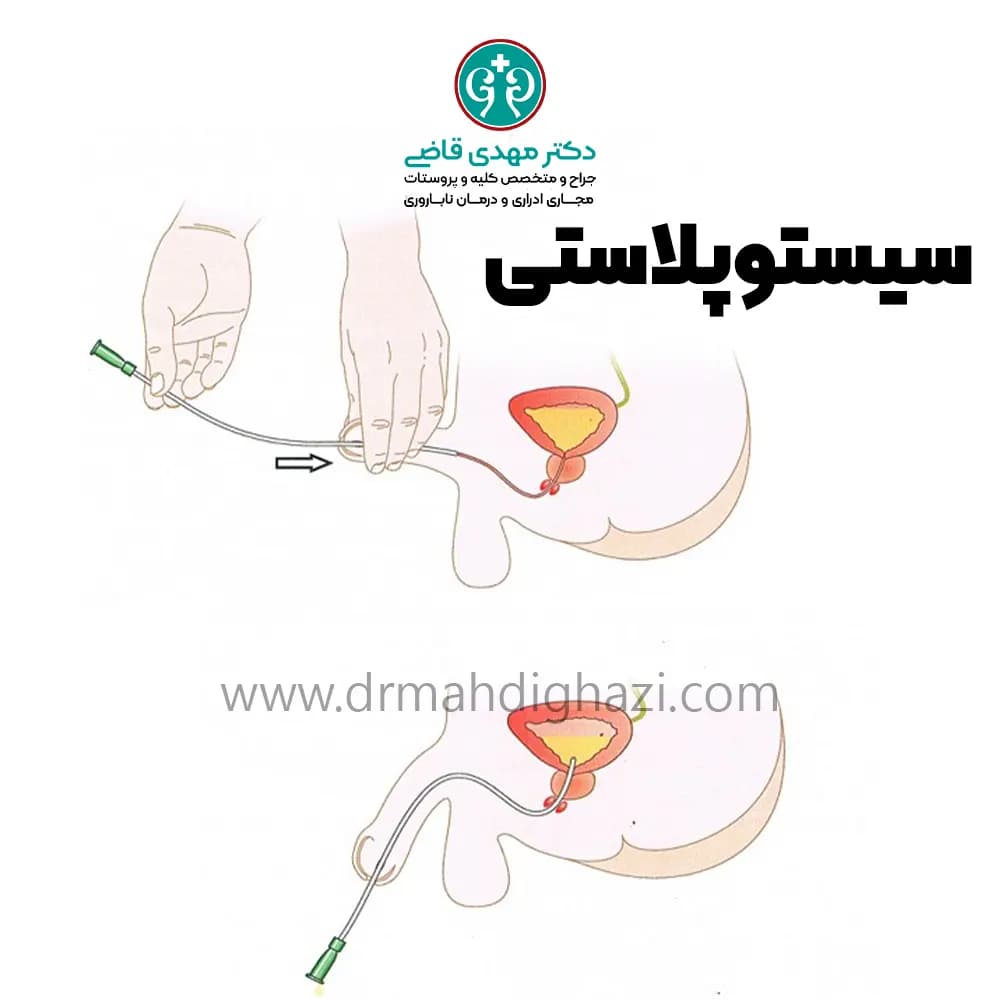
After surgery, the bladder may not be able to empty urine naturally. Therefore, most patients must learn how to pass a thin tube called a catheter through the urethra, or through a special opening created by the surgeon below the navel, into the bladder.
This catheter helps empty the bladder completely, and this method is called clean intermittent catheterization, or CIC. Performing it regularly after surgery is very important because it prevents overfilling and stretching of the bladder and helps prevent bladder rupture.
Also, the intestinal tissue that was cut and used in the bladder produces mucus secretions, which must be washed out to prevent infection or stone formation in the bladder.
Most patients return to their usual condition after 6 weeks. Full recovery may take up to 3 months, and the patient should avoid strenuous physical activity.
It is very important to follow the doctor's instructions during the recovery period.
About 3 to 4 weeks after surgery, several contrast radiology images of the bladder are taken, and if healing is complete, the catheter inside the bladder is removed.
Summary
Cystoplasty, or bladder augmentation, is a surgical procedure performed to increase bladder volume and improve bladder function. This surgery is usually recommended when problems such as urine leakage, bladder spasticity, reduced bladder capacity, and improper bladder muscle function are present. In this method, part of the intestine is grafted to the bladder to increase its capacity. After surgery, special care such as catheter use is necessary.
This surgery can help improve patients' quality of life and reduce problems related to bladder disorders.
Frequently asked questions
Actions & related links
Doctors for this topic in Mashhad
See all doctors: Best Doctors for UTI & Urinary Incontinence in Mashhad




About the author

Urologic Surgeon
دکتر مهدی قاضی, Urologic Surgeon in Mashhad. Articles on this site are written and reviewed under the supervision of the Urology Building's physicians.
View profile & bookRelated articles
All articlesWhat Is Polycystic Kidney Disease? (Fetal and Adult PKD)
دکتر مهدی قاضی · June 26, 2026
What Is a Renal Cortical Cyst? Symptoms, Diagnosis, and Treatment
دکتر مهدی قاضی · June 26, 2026
Kidney Transplant: Cost, Blood Type Compatibility, and Surgical Method
دکتر مهدی قاضی · June 26, 2026
What Is Pyelonephritis? Kidney Infection Symptoms, Diagnosis, and Treatment
دکتر مهدی قاضی · June 26, 2026
Comments
4 comments