 Tap to zoom
Cystic Kidney Diseases and Renal Dysplasia: Symptoms, Diagnosis, and Treatment
- نویسنده
- دکتر مهدی قاضی
- Published on
- June 26, 2026
- Reading time
- 5 min read
- Last updated
- Updated: June 26, 2026
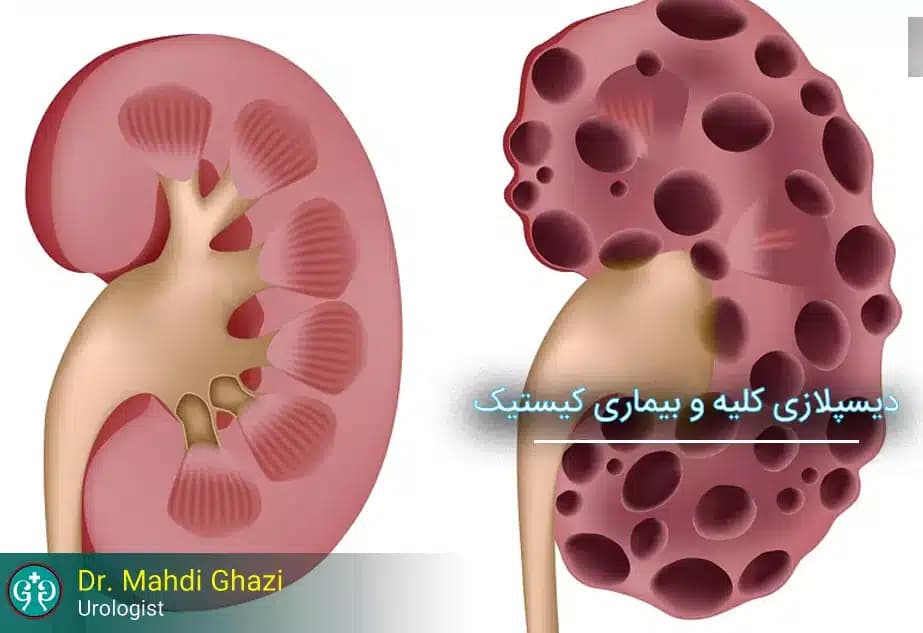
Kidneys clean the blood well from waste materials and keep fluids and solutes in the body in balance. Problems may occur during the early stages of kidney development in the womb, resulting in an abnormal kidney (kidney dysplasia) and fluid-filled cysts or sacs replacing the normal kidney tissue. As a result, kidney function can deteriorate before or after birth. Children with severe kidney failure will need blood filter treatment (kidney dialysis) until a kidney is available for transplant.
Under normal conditions, the kidneys are 2 bean-shaped organs, each of which is the size of a fist. They are located in your upper back on either side of the spine.
When your kidneys are healthy:
By making urine, they clean the blood of waste materials
They balance certain fluids and elements in your blood (such as sodium and potassium).
They produce hormones to control blood pressure and make red blood cells
Decreased kidney function associated with renal dysplasia and cystic disease may not cause any problems at first. But over time, health problems will arise.
Diagnosis of multicystic dysplastic kidney
Congenital (from birth) problems may be found during prenatal ultrasounds or ultrasounds done after birth to evaluate other symptoms.
Symptoms that could indicate kidney problems may include:
the pain
Blood in the urine
high blood pressure
Urinary tract infections
Causes of multicystic dysplastic kidney
A defect in the early development of the kidney leads to renal dysplasia or cystic kidney disease. Most of these defects occur spontaneously and we know little about them. On the other hand, some of them are genetic and passed from parents to children.
Polycystic kidney disease is one of the most common genetic diseases that lead to cystic kidneys.
■ Autosomal dominant disorders are caused by a defective gene from one parent. This means that having a gene from one of the parents has a chance of causing disease, so if the father or mother with tosomal disease is dominant, half of their children may inherit the defective gene and be affected.
■ Autosomal recessive disorders are caused by the transmission of defective genes from both parents; Parents may only be carriers and not sick. Therefore, 1 person out of every 4 children has a chance of contracting this disease, and half of the children may only be carriers of the disease.
If you have been diagnosed with cystic kidney disease:
You should talk to your doctor about whether your children should be screened. Many cystic kidney diseases are passed down from one generation to the next, and the specific disorders that may occur will determine whether your children should be tested. Cystic kidney disease cannot be cured, but early evaluation in children can be helpful in reducing their problems.
If your child has been diagnosed with cystic kidney disease:
You may need to experiment.
Some cystic kidney disease in children is passed down from one parent, and the test will tell you which parent is also affected. Although in most cases there is a family history of similar problems.
Types of kidney dysplasia and cystic kidney disease
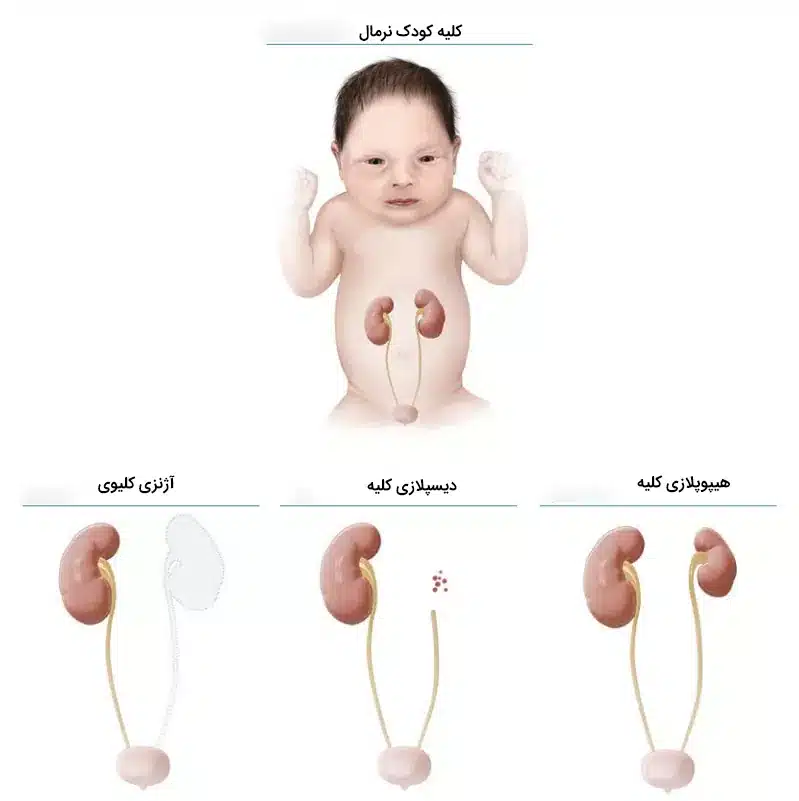
Renal agenesis
A person is born with only one functioning kidney. Sometimes imaging tests show a very small kidney in an abnormal position. Your doctor may suggest other tests for your child. It is important to find out if a small amount of kidney tissue has been lost.
Treatment of renal agenesis
For infants and children, there is no treatment when only one kidney is affected. Treatment depends on other problems in the person.
Sometimes dietary changes can help. A low blood glucose diet or a low sodium diet may be recommended. Your medical team or a nutritionist trained in kidney disease will guide you.
Limiting contact sports is recommended along with avoiding activities that put you at risk of injury (such as riding a motorcycle and using public transportation and trampolines). In order to check the changes in the kidneys, monitoring and checking should be done regularly.
Kidney dysplasia
Abnormal tissue grows in a small part of one kidney (unilateral) or in both kidneys (bilateral). This disorder can occur predictably or randomly in one or both kidneys.
The picture below shows 3 types of kidney dysplasia and cystic kidney disease in children.
Treatment of kidney dysplasia
Treatment may only include managing symptoms, such as:
Blood pressure check
Kidney function test
Urine test for protein measurement
Periodic ultrasounds can be used to ensure that the other kidney continues to grow normally and that no other problems develop. Antibiotics may be needed for urinary tract infections.
A kidney should only be removed if it causes pain or high blood pressure, or if an ultrasound shows an abnormal appearance suspicious for cancer.
Kidney hypoplasia
Part or all of the kidney does not develop fully in the womb and is smaller than normal.
The small size means that the kidney is not functioning as well as a normal kidney.
One or both kidneys may be affected (more serious if seen in both kidneys)
It is not passed from parents to children and occurs equally in boys and girls.
Kidney size is related to the likelihood of future problems. If a child's kidneys are too small, kidney function may decline as the child enters adolescence.
Renal failure may occur, requiring supportive measures.
Renal hypoplasia may also be associated with abnormalities of the ureter (the tube that connects the kidney to the bladder). This can cause urine to back up from the bladder to the kidney. The ureter can also become blocked where it normally enters the kidney.
Treatment of renal hypoplasia
Any ureter-related problems should be managed to reduce the risk of infection and rapid kidney loss. But unfortunately, this issue does not neutralize the process of kidney hypoplasia. Treatment consists of maintaining fluids and electrolytes and correcting blood acidity levels. Your doctor or a trained nutritionist can help you with this.
Autosomal recessive polycystic kidney disease (ARPK)
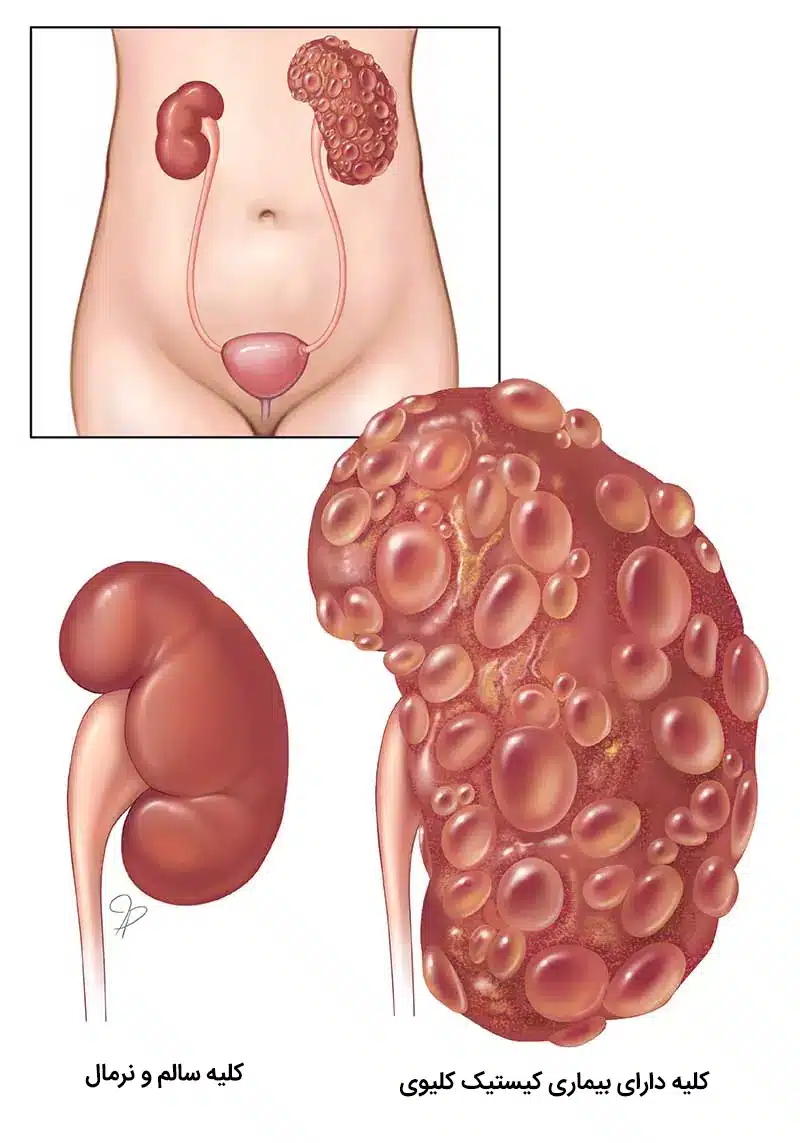
In this case, the kidneys appear larger than normal in the ultrasound, the cysts are numerous and small and cannot be seen in the ultrasound.
This disease is also called "neonatal polycystic kidney". It is often seen in fetal ultrasound during pregnancy. At birth, there are symptoms such as bulges in the baby's abdomen on both sides or kidney failure. It may also first appear in adolescence or adulthood.
There is a wide range of severity in the disease. It may appear at a young age and progress to varying degrees of kidney failure. This condition can be associated with excessive growth of connective tissue in the liver.
Treatment of autosomal recessive polycystic kidney (ARPK)
Management of this disease focuses on supportive measures such as dialysis for kidney failure. If the kidneys become too large, some children will benefit from having them removed.
This is mostly done if the increase in size is enough to cause problems with breathing, feeding or dialysis.
Autosomal dominant polycystic kidney disease (ADPK)
This disease is one of the most common causes of kidney failure. Both kidneys have cysts of different sizes that may also appear in the liver. It used to be called "adult polycystic kidney disease" because most cases are diagnosed between the ages of 30 and 50 (but the disease can appear in all age groups).
It is transmitted from parents to children (50% of children born to parents with this disease will also have it).
Symptoms in infants are kidney failure and breathing problems.
Symptoms in children older than 1 year are high blood pressure or enlarged kidneys.
Symptoms in adults include visible or microscopic blood in the urine, flank (side) pain, high blood pressure, urinary tract infections, and occasionally digestive problems.
Some people may also have abnormalities in the blood vessels in the brain, which can lead to sudden bleeding and the risk of an aneurysm.
While ADPK can affect your quality of life and make you feel weak, the good news is that your risk of kidney tumors is no higher than in the general population.
Treatment of autosomal dominant polycystic kidney disease (ADPK)
High blood pressure occurs in about 60% of patients with this disease. Blood pressure should be controlled to prevent heart disease and bleeding or stroke.
More than half of patients with ADPK experience pain, which can be severe, sudden, and long-lasting. Pain can be caused by kidney stones, blood clots or infection. Pain treatment depends on its cause.
Infections are often difficult to treat due to the limited effectiveness of antibiotics in the cyst fluid. Women with ADPK are at increased risk for urinary tract infections. If the infection does not respond to medications, the doctor may suggest draining the cyst.
Needle aspiration, laparoscopy, or open surgery can drain cysts. While draining the cysts can be helpful, fluid is likely to build up again. In any case, patients should be followed carefully because the disease can worsen and lead to kidney failure.
Nephronophthisis of the young and medullary cystic disease complex
It is a rare disease, with symptoms such as:
Cysts of various sizes, mostly less than 1 cm
Binge drinking and feeling thirsty
Urinary incontinence
eye problems
Skeletal abnormalities
Liver fibrosis
Less than half of those diagnosed in childhood have kidney cysts.
Renal failure often occurs in early adolescence (juvenile nephropathy) to age 20 to 40 (medullary cyst disease).
Treatment of juvenile nephronophthisis and cystic medullary kidney disease
Because these patients are very thirsty and lose water, they must replace salt in their diet. Renal failure is likely to occur, requiring supportive measures (such as dialysis).
Cystic kidney disease syndromes
Cystic kidney disease that occurs in people with other serious diseases. Below are six different types of cystic disease.
Tuberous sclerosis
It is a genetic disorder that causes various types of tumors. These tumors are formed in different organs. Symptoms include epilepsy, growth retardation, and fleshy lumps under the skin. Tumors are benign and mainly kidney fatty tissue tumors (angiomyolipoma) may occur.Kidney cyst It develops in 20% of people with this disease, which is often in childhood. The risk of kidney tumors is higher in patients with tuberous sclerosis (a genetic disease) than in the general population.
It is an inherited disease that causes fluid-filled sacs (cysts) and tumors in different parts of the body. This disease occurs in 50% of children with affected parents.
Symptoms include:
Abnormalities of brain and eye blood vessels
Pancreatic, kidney and epididymal cysts
Benign fatty tumors in many places between the cysts
Adrenal Gland Tumors (Pheochromocytoma)
Renal cysts occur in about 80% of patients with von Hippel-Lindau disease. Kidney cancer occurs in about 40% of patients with von Hippel-Lindau disease.
Cysts and tumors often do not cause symptoms unless they become very large and cause pain or bleeding due to bursting.
Tuberous sclerosis treatment:
Some symptoms are treatable and you should work with your doctor to best manage them. Angiomyolipomas (masses of fatty-vascular tissue) may require treatment if they grow larger to reduce the risk of spontaneous bleeding. Medications may be used to control seizures and help with behavioral disorders.
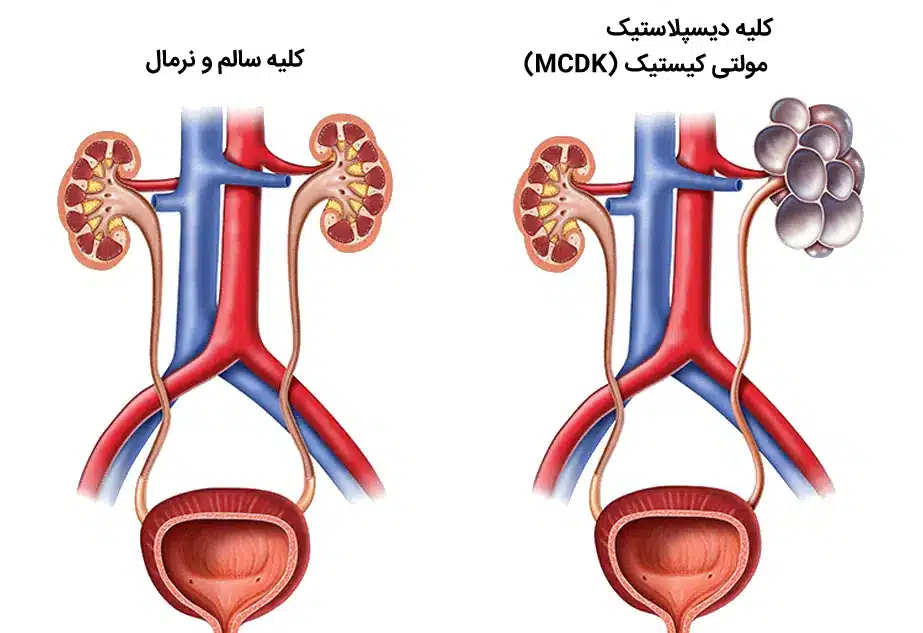
Multicystic dysplastic kidney (MCDK)
The most common type of cystic kidney disease in children is It can be felt as a lump in the baby's abdomen. The kidney, often found on fetal ultrasound, looks like a cluster of grapes with very little kidney tissue in between, rather than a normal-shaped organ. A defective kidney generally does not work. In 10% of cases, there may be an obstruction at the junction of the ureter with the renal pelvis on the side of the opposite kidney. In 20% of cases, there may be abnormal return of urine from the bladder to the ureter.
They may be associated with high blood pressure and kidney tumors in children, but these are rare. They often do not cause problems and are usually found during tests for other diseases.
Symptoms include stomach pain, blood in the urine, and (in rare cases) high blood pressure. These cysts occur equally in both sexes.
Simple kidney cysts are not associated with kidney cancer, but if the cyst is complex (with many holes or irregularities in the wall) or contains calcium, the risk of cancer increases.
Treatment of multicystic dysplastic kidney (MCDK)
Most of these kidneys shrink in size over time until they are no longer visible on ultrasound. Some are large enough to put pressure on the stomach and diaphragm, causing vomiting and difficulty breathing, respectively. In these cases, it may be necessary to remove the kidney with surgery.
Medullary spongy kidney
Medullary spongy kidney (Medullary Sponge Kidney - MSK) is a rare congenital disorder in which numerous small cysts develop in the kidney tubes that are responsible for collecting urine.
This disease is usually diagnosed in young or middle age and its symptoms include kidney pain, presence of blood in urine (hematuria) and increased calcium level in urine.
Patients often come with the problem of frequent and recurring kidney stones, which is one of the main complications of this disease.
Treatment of medullary spongy kidney
In this disease, focus on preventing the creation kidney stones and urinary infections. Increased water intake may help reduce calcium excretion and limit stone formation. If you have a UTI that keeps coming back, long-term, low-dose antibiotics may help.
Acquired cystic kidney disease (ACKD)
It is a common complication in people with long-term kidney failure, especially those who are on dialysis for a long time. In this disease, small and scattered cysts are formed in the kidneys, which often remain asymptomatic. However, in some cases it may be accompanied by back pain or Presence of blood in the urine (hematuria) be accompanied Sometimes, these cysts become infected and cause symptoms such as fever and pain. Although rare, this condition can also increase the risk of developing kidney cancer.
Treatment of acquired cystic kidney disease
There is no specific treatment for this disease and its management is mostly focused on reducing symptoms and preventing complications. If the cysts become infected, antibiotics are usually prescribed. In cases where there is heavy bleeding, persistent pain, or evidence of cancer, specialized treatment such as surgery may be necessary. Also, regular follow-up with imaging and clinical tests is necessary to assess the condition of the cysts and the health of the kidneys.
Most of these diseases do not have a single treatment and the focus is on symptom management. And the management and treatment of each patient can be different depending on the expert doctor's opinion
Post-treatment measures
Symptoms of worsening cystic kidney disease include:
flank pain
The presence of blood in the urine
Urinary tract infections
Kidney disease may also progress without obvious symptoms.
Your urologist will recommend regular follow-up tests based on the condition of your kidneys. Since there is no cure for these problems, long-term monitoring is required. To achieve your best level of health, it is important to follow your doctor's recommendations over time.
Summary
Cystic diseases and kidney dysplasia are rare but important problems that can severely affect kidney function.
These diseases are often caused by genetic disorders or defects in the primary development of the kidneys. Kidney dysplasia and cystic diseases can have different effects on people's health from fetal to adulthood.
These disorders may be asymptomatic or accompanied by symptoms such as pain, high blood pressure, frequent urinary infections and even kidney failure.
Treatment for these diseases varies depending on their type and severity and can include dialysis, symptom management, or surgery.
In cases where the disease has a genetic origin, it is necessary to evaluate the family and perform genetic tests. Regular care and lifestyle changes can help reduce associated problems.
Frequently asked questions
Actions & related links
Doctors for this topic in Mashhad
See all doctors: Best Urologists in Mashhad




About the author

Urologic Surgeon
دکتر مهدی قاضی, Urologic Surgeon in Mashhad. Articles on this site are written and reviewed under the supervision of the Urology Building's physicians.
View profile & bookRelated articles
All articlesWhat Is Polycystic Kidney Disease? (Fetal and Adult PKD)
دکتر مهدی قاضی · June 26, 2026
What Is a Renal Cortical Cyst? Symptoms, Diagnosis, and Treatment
دکتر مهدی قاضی · June 26, 2026
Kidney Transplant: Cost, Blood Type Compatibility, and Surgical Method
دکتر مهدی قاضی · June 26, 2026
What Is Pyelonephritis? Kidney Infection Symptoms, Diagnosis, and Treatment
دکتر مهدی قاضی · June 26, 2026
Comments
0 comments
No comments yet. Be the first to share your thoughts.