 Tap to zoom
Bladder Removal for Bladder Cancer: Methods, Effectiveness, and Side Effects
Learn when cystectomy is used for bladder cancer, the difference between partial and radical bladder removal, urinary reconstruction options, recovery, risks, and life after surgery.
- نویسنده
- دکتر مهدی قاضی
- Published on
- June 26, 2026
- Reading time
- 5 min read
- Last updated
- Updated: September 4, 2026
Bladder removal for bladder cancer is one of the main options for treating and controlling this disease, and it is usually recommended in advanced or specific stages of cancer. In this article, we explain "why and how this surgery is performed, what the different methods are, what postoperative care involves, and how quality of life may change after bladder removal".
What Is Bladder Removal for Bladder Cancer?
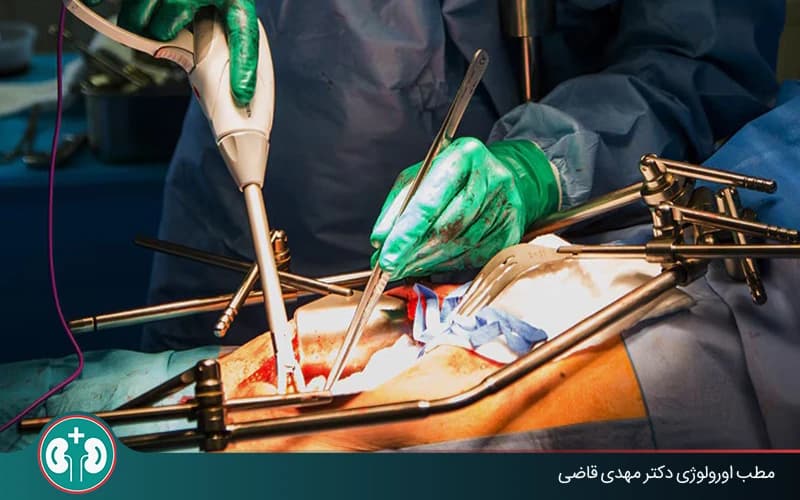
Bladder removal for bladder cancer, medically known as cystectomy, is one of the main treatments for this disease. In this operation, part or all of the bladder is removed, depending on how far the cancer has advanced, to help prevent spread and improve the chance of cure or longer survival.
Bladder infection, overactive bladder, incontinence and bladder tumours Bladder disease treatment in Mashhad
Note: To improve care quality and patient satisfaction, appointments are triaged by reason for visit. Each physician sees patients within the relevant urology subspecialty.

Book appointment
In early stages, only the tumor and a limited part of the bladder wall may be removed. In more advanced cases, however, removal of the entire bladder (radical cystectomy) is needed. After this surgery, doctors use part of the intestine to create a new bladder or another route for urine drainage.
Why Is Bladder Removal Performed for Bladder Cancer?
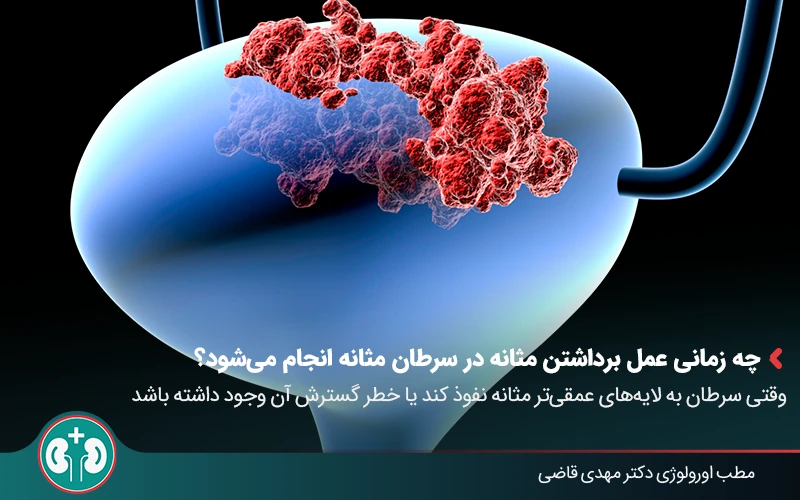
In early stages, minimally invasive methods such as transurethral resection of bladder tumor (TURBT) are usually used. But when cancer has grown into deeper layers of the bladder, or when there is a risk that it may spread to nearby organs and lymph nodes, bladder-removal surgery, or cystectomy, becomes necessary.
Situations in which surgery is usually recommended include:
Appointments related to Bladder infection, overactive bladder, incontinence and bladder tumours Bladder disease treatment in Mashhad
Open the public booking path to review times and related information.
Book appointment
1. Muscle-invasive cancers: When cancer has grown into the muscle of the bladder wall and other treatments are not enough.
2. High-risk superficial cancers: If the cancer is present in several areas of the bladder, is aggressive, or has not responded to other treatments.
3. Severe infection or bleeding: In rare cases, when the disease causes bleeding or infection that cannot be controlled.
Q&A — Bladder infection, overactive bladder, incontinence and bladder tumours Bladder disease treatment in Mashhad
General questions are shown on the destination page after review.
Book appointment
For patients with high-risk non-muscle-invasive bladder cancer (NMIBC), BCG is usually placed directly into the bladder first. If this treatment does not work, bladder-removal surgery is considered.
Can a Patient Recover After Bladder Removal?
Cystectomy is usually performed for patients with muscle-invasive cancer (cancer that has grown into the muscular wall of the bladder) or in high-risk cases that have not responded to intravesical BCG therapy (an immune-stimulating medication).
If the disease has not yet spread to distant organs, this surgery can offer a chance of complete treatment and longer survival.
Even when surgery is successful, "regular follow-up and ongoing care are essential to prevent recurrence and manage complications." Life after bladder removal does involve changes, but with bladder reconstruction and proper care, many patients can maintain a good quality of life.
Preparation for Bladder-Removal Surgery + Preoperative Care
Before cystectomy, the necessary tests and care help patients enter surgery in better condition and lower the risk of complications. The key points for preparation and preoperative care are outlined below.
1. Tests and examinations: These include blood and urine tests, imaging (CT scan or MRI), and, when needed, heart or lung evaluation.
2. Stopping certain medications: Blood-thinning medicines such as aspirin or warfarin should be stopped several days before surgery only as directed by the doctor.
3. Lifestyle changes: Stopping smoking, eating a healthy diet, and drinking enough water help reduce complications.
4. Education and counseling: Explaining the operation, urine drainage after surgery, and stoma care helps reduce patient anxiety.
5. The day before surgery: Fasting from midnight and doing measures such as bathing or an enema if recommended by the doctor.
How Bladder-Removal Surgery Is Performed
Cystectomy, or bladder-removal surgery, is performed in two main forms. The choice of method depends on the stage of cancer, tumor size, and the patient's overall condition.
Complete cystectomy (removal of the entire bladder)
Partial cystectomy (removal of part of the bladder)
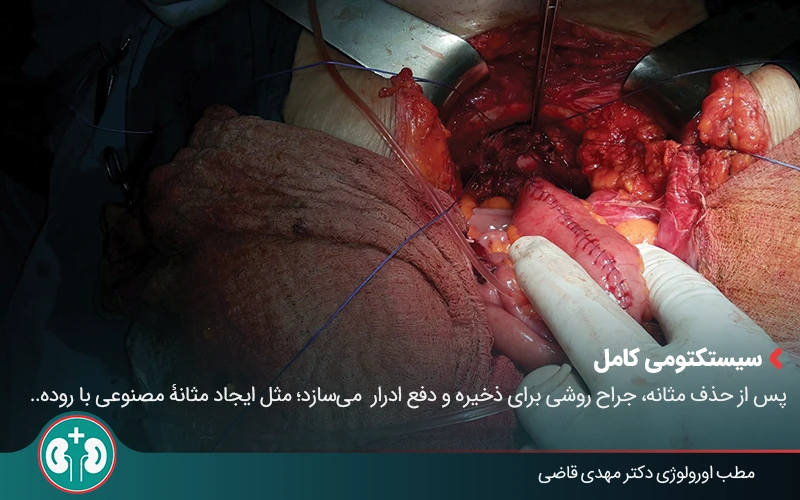
1. Complete cystectomy
This is the most common type of surgery and is usually performed when cancer has grown into the deeper bladder layers or has spread to several areas. In this method, the entire bladder and nearby lymph nodes are removed. In men, the prostate and seminal vesicles may also be removed, and in women, the uterus and ovaries may be removed as well. After the operation, the surgeon restores urine drainage using methods such as a neobladder or stoma.
2. Partial cystectomy
Only the part of the bladder that contains the tumor is removed, and the healthy part is preserved. This method is suitable only for small, solitary, limited tumors and does not require urinary reconstruction. However, because the risk of cancer recurrence is higher, it is used less often than complete cystectomy.
Who Is Bladder Removal for Bladder Cancer Suitable For?
This surgery is suitable for people whose physical condition and disease stage make cystectomy the best chance for treatment and recovery. The appropriate conditions for this surgery are reviewed below.
Disease stage: The main requirement is invasive cancer. Patients with early but high-risk cancers, such as repeatedly recurrent tumors, may also be candidates for surgery.
Overall health: The patient must have sufficient heart, lung, kidney, and liver health to tolerate the stress of surgery.
Age: Older age alone does not prevent surgery, but overall health and the body's ability to recover are more important.
Who Is Bladder-Removal Surgery Not Suitable For?
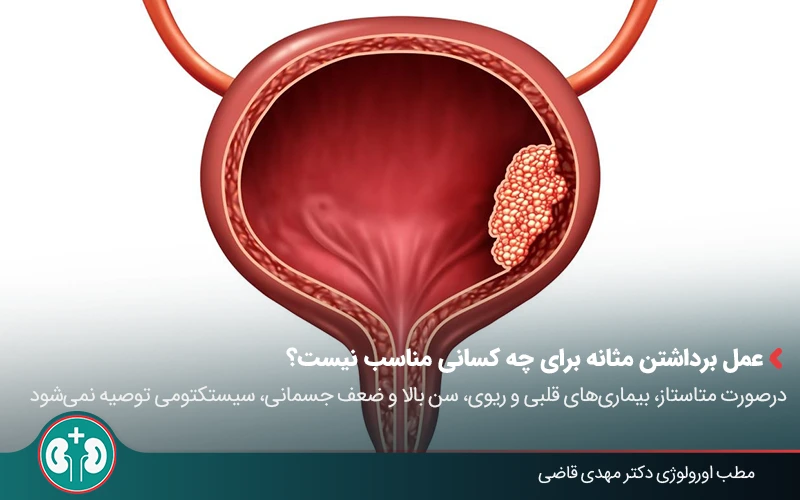
This surgery is not suitable for patients who:
Are very old or severely frail and cannot tolerate anesthesia and a long operation.
Have serious heart, lung, or liver disease that increases surgical risk.
Have cancer that is advanced and has spread to distant organs.
Are not willing to accept major lifestyle changes after surgery.
Have a physical condition that does not allow urinary reconstruction or creation of an alternative route for urine drainage.
Complications and Risks of Bladder Removal
Like any major surgery, bladder removal can cause short-term and long-term complications. Below, we provide more detail about these complications and how they are managed.
Short-Term Complications of Bladder Removal | |
|---|---|
Complication | Explanation |
Pain and discomfort at the surgical site | Controlled with pain medication and nursing care |
Wound or urinary tract infection | Can be controlled with hygiene measures and antibiotics |
Bleeding or blood clot (DVT) and pulmonary embolism | Requires careful follow-up and sometimes anticoagulant medication |
Heart and lung problems | Related to anesthesia and managed under medical supervision |
Digestive problems | Constipation or slow bowel movement improves with an appropriate diet and gradual movement |
Long-Term Complications of Bladder Removal | |
|---|---|
Complication | Explanation |
Change in the way urine is passed | Urine leakage or incontinence/retention with a neobladder can occur; proper training helps |
Sexual problems | Erectile dysfunction in men and reduced sensation or vaginal dryness in women; medication and sexual counseling can help |
Metabolic and kidney problems | Using intestine for reconstruction may cause electrolyte disturbances or reduced kidney function |
Narrowing of the urethra or stoma (stenosis) | Blockage or narrowing can occur in patients with a stoma or continent cutaneous reservoir |
Change in quality of life | Stoma care or catheter use requires adjustment |
Cancer recurrence | Regular follow-up after surgery is essential |
Psychological complications | Anxiety, depression, or body-image concerns may require psychological support |
Life Expectancy After Bladder-Removal Surgery
One of the main concerns for patients and families is life expectancy after bladder removal. The answer depends on several factors, the most important of which is "the stage of the disease at diagnosis and at the time of surgery."
In patients whose cancer is still limited to the bladder and in earlier stages, the chance of complete recovery and longer life is much higher. Even if the cancer has invaded the muscle layer but has not spread to other organs, cystectomy can significantly improve the chance of recovery and longer survival.
According to an article in the Central European Journal of Urology, the overall five-year survival rate after radical cystectomy is 50% to 70%. According to studies from the Korean Urological Association, when the cancer has spread to other organs, this rate is about 30%.
In addition to disease stage, the patient's general condition, age, type of urinary reconstruction, and other medical conditions play an important role in estimating life expectancy. Regular follow-up and additional treatments such as chemotherapy also help improve survival.
Life After Bladder Removal for Bladder Cancer
After bladder-removal surgery, doctors use different methods to replace the bladder's function. These are called bladder reconstruction or urinary diversion. They help the patient store and pass urine. Below, we explain several bladder-reconstruction methods used after cystectomy:
1. Neobladder
A piece of intestine is used to create a new bladder, which is connected to the urethra. The patient may be able to pass urine in a more natural way, but its function is not always 100% like a normal bladder, and nighttime incontinence or urinary retention may occur. Learning catheter drainage and having regular medical follow-up are essential.
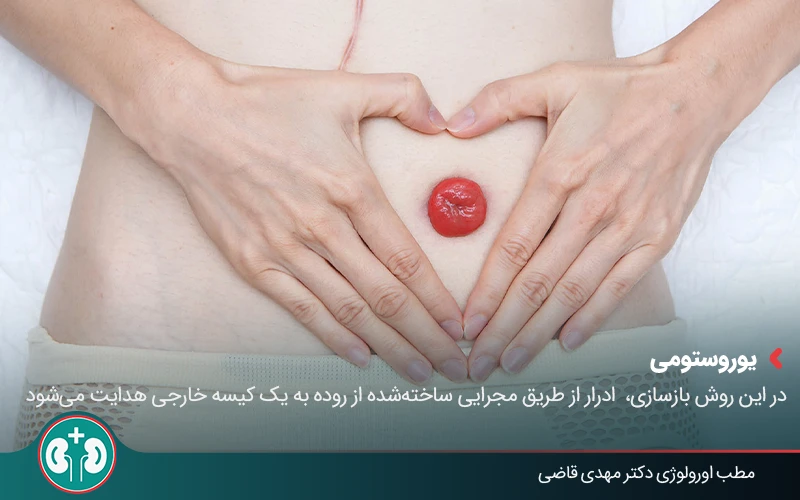
2. Urostomy, especially an ileal conduit
This is the most common type of reconstruction. Urine is directed through a channel made from intestine (ileal conduit) into an external bag. It requires careful training and consistent patient care; without regular emptying and pouch care, problems such as infection, leakage, or pouch overfilling may occur.
3. Continent Urinary Reservoir
In this method, an internal reservoir is made from intestine. Urine is stored inside it, and the patient empties the reservoir with a catheter at set times. This method has a more natural appearance and does not require an external bag, but consistency and regular emptying are very important.
Care After Bladder Removal for Bladder Cancer
The recovery period after cystectomy is very important, and carefully following the doctor's instructions helps speed recovery and prevent complications. Care has three main parts:
Category | Key points |
|---|---|
Diet | Start with clear liquids, then soft foods, then a regular diet. Drink enough water and get enough fruit, vegetables, and protein. Avoid fatty, fried, and heavily spiced foods. |
Physical activity | Begin gentle walking as soon as the doctor allows it. Avoid heavy exercise and lifting objects for several months. Do light abdominal and pelvic exercises with guidance from the doctor or a physical therapist. |
Medical follow-up | Regular visits for tests and to check healing progress. Report fever, severe pain, or urine leakage immediately. |
Cost of Bladder-Removal Surgery and Length of Hospital Stay
The cost of bladder removal depends on several factors, including the type of hospital, the surgical method, and the need for bladder reconstruction. It includes the cost of "surgery, medicines, tests, and postoperative care."
The hospital stay may be about 2 to 3 days in uncomplicated cases; however, it may be longer if the surgery is complex or a complication occurs. After discharge, the patient still needs rest and regular follow-up with the doctor.
Summary and Key Points About Bladder Removal
Bladder removal, or cystectomy, is one of the main treatments for bladder cancer in advanced stages and is usually performed when the tumor has grown into the muscular wall or beyond it. This surgery may be open or laparoscopic, and afterward, depending on the patient's condition, methods such as a neobladder, urostomy with an external bag, or an internal reservoir are used for urine drainage.
The main goal of the operation is to remove the tumor completely and reduce the risk of disease progression, but complications such as bleeding, infection, bowel obstruction, and changes in urine drainage can occur. Quality of life after surgery depends on the type of reconstruction; a neobladder or internal reservoir can allow a more natural way to pass urine, while urostomy is simpler but requires an external bag. When done at the right time and followed by careful postoperative care, cystectomy can be part of a curative cancer treatment plan.
Every patient has unique circumstances, and decisions about the best treatment method and type of urinary reconstruction should be made in consultation with a urology specialist.
Frequently Asked Questions
Actions & related links
Doctors for this topic in Mashhad
See all doctors: Best Doctors for UTI & Urinary Incontinence in Mashhad




About the author

Urologic Surgeon
دکتر مهدی قاضی, Urologic Surgeon in Mashhad. Articles on this site are written and reviewed under the supervision of the Urology Building's physicians.
View profile & bookRelated articles
All articlesWhat Is Polycystic Kidney Disease? (Fetal and Adult PKD)
دکتر مهدی قاضی · June 26, 2026
What Is a Renal Cortical Cyst? Symptoms, Diagnosis, and Treatment
دکتر مهدی قاضی · June 26, 2026
Kidney Transplant: Cost, Blood Type Compatibility, and Surgical Method
دکتر مهدی قاضی · June 26, 2026
What Is Pyelonephritis? Kidney Infection Symptoms, Diagnosis, and Treatment
دکتر مهدی قاضی · June 26, 2026
Comments
0 comments
No comments yet. Be the first to share your thoughts.