
 Tap to zoom
Bedwetting and Its Causes in Children
Bedwetting is common in children and often runs in families. Learn common causes, warning signs, home strategies, evaluation, treatment options, and prognosis.
- نویسنده
- دکتر مهدی قاضی
- Published on
- June 26, 2026
- Reading time
- 5 min read
- Last updated
- Updated: June 27, 2026
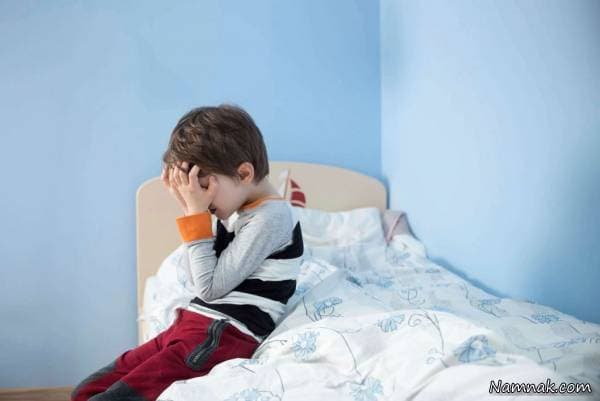
Bedwetting is a common problem among children and it is generally hereditary. This problem can be uncomfortable for the child, but most children and teenagers will eventually get rid of this disease.
Causes of enuresis
Various factors play a role in the occurrence of nocturnal enuresis, but in general, the reason cannot be definitively stated, and the most common factors are:
Having a small bladder: Your child's bladder may not have enough volume to store urine.
Having an overactive bladder: in this case, the bladder has abnormal contractions and this issue has nothing to do with the child's hyperactivity.
Having a neurogenic bladder: in this condition, the bladder wall is thick, so it does not have the elasticity and urine-holding capacity of a normal bladder.
Environmental stress: constant tension and psychological pressures cause this problem.
Inability to recognize a full bladder: In this case, the nerves that control the bladder develop late and a full bladder does not wake the child, especially if he is in a deep sleep.
A structural problem in the nervous system or urinary tract
Imbalance in hormones
Urinary tract infection
Short-term sleep apnea (apnea): Sometimes this can be a sign of sleep apnea, in which the child temporarily stops breathing.
diabetes
Chronic constipation
Bedwetting in children is normal. Many children under the age of 5 have nocturnal enuresis, it may take time for the child to learn to control his urination during the night. If you have done the above tasks and your child is still suffering from nocturnal enuresis, see a doctor. If your child has nocturnal enuresis again after 6 months, it is also necessary to see a doctor.
When should we take bedwetting seriously?
Persistence of nocturnal enuresis after 5 years of age
If the child's height growth stops
Moistening and wetting of underwear during awakening
A child has recently had enuresis
A child who is very thirsty and whose urine is always clear
A child with a history of urinary tract infection
A child who often suffers from headaches
A child who wakes up a lot and generally snores
Having abnormal urinary flow such as stopping and connecting urine
A child who always suffers from pain in the side or lower abdomen
Things that can be done to help treat bedwetting at home:
Give your child enough fluids during the day.
Make sure that the child goes to the toilet enough times during the day, about 4 to 7 times during the day, especially before going to bed.
Reward your child for his positive actions, for example, you can set a reward for him if he goes to the bathroom before going to bed.
Use waterproof underlays on the baby's mattress.
Make sure the child has easy access to the bathroom during the night.
Things not to do:
This problem can be due to a series of underlying diseases such as diabetes or constipation, so:
Do not punish your child for this, it is not the child's fault and it can make bedwetting worse.
Give your child less liquids that contain caffeine (such as Coca-Cola, tea, and coffee). These substances may cause the child to urinate more.
Do not regularly wake up the child during sleep or force him to use the toilet during the night, this will not help your child in the long run.
Urinary factors
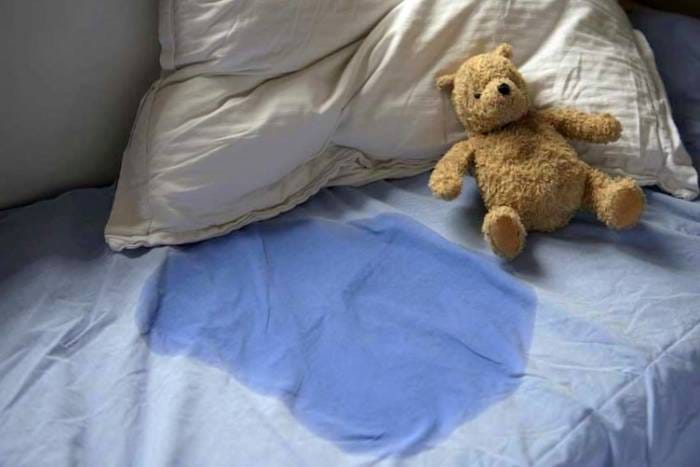
The following can make a person susceptible to this long-term disease:
Male gender
Occurrence of nocturnal enuresis in a large fraction of the nights of the month
Urinary incontinence during the day and fecal incontinence or constipation
Family history of enuresis
History of upper respiratory system obstruction and snoring
Child overweight
Nervous system problems such as a history of cerebral palsy or spinal deformities
Childhood stress such as hospitalization, separation from mother and sexual abuse
Assessments
Generally, a urine test for nocturia is not necessary except in cases where a person has recently suffered from nocturia, or there are daily symptoms, or there are signs of urinary tract infection or diabetes in the history.
Nocturnal enuresis treatment
The first treatment for nocturnal enuresis is education, reassurance and general recommendations for behavioral therapy, in cases where the child goes on a trip or stays overnight at someone else's house, drug treatments may also be recommended from the beginning.
The first treatment for a child suffering from nocturnal enuresis is to use beds equipped with alarm, such beds are usually not helpful for children under 7 years old, but for children over 7 years old, their value is generally the same as drugs.
Desmopressin can be prescribed in cases where the use of beds equipped with alarm does not help or short-term control of nocturnal enuresis is necessary. In other cases, it is better to use a bed and an alarm first, and if there is no response, desmopressin can be started.
Desmopressin sublingual tablets:
These tablets are started with a dose of 120 micrograms and can be increased to 240 micrograms in one or two weeks if there is no proper response. If desmopressin is used, it is necessary to limit the consumption of liquids starting one hour before taking the drug and continue for up to 8 hours.
In case of long-term use of desmopressin, it is necessary to stop taking the drug every 3 months for one week so that if the child's enuresis is cured, this drug will not be continued.
Other treatments
The use of imipramine tablets is considered for children over the age of 6 who are resistant to desmopressin treatment, the simultaneous use of imipramine with anticholinergic drugs such as tolterodine or solifenacin tablets is better than single drug treatment with imipramine.
Research has shown that the use of anticholinergic drugs such as tolterodine or solifenacin along with other methods mentioned above (including imipramine or desmopressin in beds equipped with alarm) can be very helpful.
Prognosis:
Most children who do not have severe neurological deficits or learning problems recover sooner or later, bedwetting without daily symptoms usually recovers easily, although a person may have single attacks of bedwetting in the future.
In many children, nocturnal enuresis may continue until adulthood, and studies have shown that children who have a severe form of nocturnal enuresis may be more likely to have this problem in adulthood.
Actions & related links
Doctors for this topic in Mashhad
See all doctors: Best Pediatric Urologists in Mashhad




About the author

Urologic Surgeon
دکتر مهدی قاضی, Urologic Surgeon in Mashhad. Articles on this site are written and reviewed under the supervision of the Urology Building's physicians.
View profile & bookRelated articles
All articlesWhat Is Polycystic Kidney Disease? (Fetal and Adult PKD)
دکتر مهدی قاضی · June 26, 2026
What Is a Renal Cortical Cyst? Symptoms, Diagnosis, and Treatment
دکتر مهدی قاضی · June 26, 2026
Kidney Transplant: Cost, Blood Type Compatibility, and Surgical Method
دکتر مهدی قاضی · June 26, 2026
What Is Pyelonephritis? Kidney Infection Symptoms, Diagnosis, and Treatment
دکتر مهدی قاضی · June 26, 2026
Comments
6 comments