
 برای بزرگنمایی لمس کنید
کلیه نعل اسبی , بررسی کامل این ناهنجاری مادرزادی
- نویسنده
- دکتر مهدی قاضی
- تاریخ انتشار
- ۲۱ تیر ۱۴۰۳
- زمان مطالعه
- ۶ دقیقه مطالعه
- آخرین بهروزرسانی
- بهروزرسانی: ۲۹ تیر ۱۴۰۵
کلیه نعل اسبی (Horseshoe Kidney) یک ناهنجاری مادرزادی است که در حدود 1 مورد از هر 500 تولد رخ میدهد.
در این وضعیت، دو کلیه در ناحیه تحتانی به هم متصل میشوند و شکلی شبیه به نعل اسب پیدا میکنند. این عارضه بیشتر در دوران رشد جنین رخ میدهد و ممکن است وراثتی باشد.
کلیهها به طور معمول در لگن شکل میگیرند و در دوران جنینی به سمت بالا حرکت میکنند تا به محل نهایی خود در پشت بدن برسند.


در کلیه نعل اسبی، این حرکت در قسمت پایین متوقف شده و دو کلیه در قسمت پایه به هم متصل میشوند و در پسران نسبت به دختران شایعتر است.
این وضعیت باعث میشود که کلیهها به هم نزدیکتر شوند و موقعیت غیر عادی ای در بدن داشته باشند که میتواند عملکرد طبیعی سیستم ادراری را مختل کند.
کلیه نعل اسبی ممکن است بدون علائم و بدون هیچ گونه مشکلی در طول زندگی باقی بماند، اما در برخی موارد، میتواند منجر به مشکلات مختلفی شود.
سیستم ادراری بدن چگونه کار میکند؟
سیستم ادراری، سیستم زهکشی بدن است و شامل چهار اندام اصلی میباشد:
دو کلیه
دو حالب
یک مثانه
یک مجرای ادرار (لوله خروج ادرار)
کلیهها دو اندام لوبیایی شکل هستند که در قسمت میانی پشت، درست پایین دندهها قرار دارند. وظیفه اصلی کلیهها فیلتر کردن خون است.
هر روز کلیهها حدود 150 لیتر خون را تصفیه میکنند و از طریق خروج آب اضافی و مواد زائد از بدن، حدود یک تا دو لیتر ادرار تولید میکنند. این ادرار از کلیهها به مثانه رفته و سپس از طریق مجرای ادرار دفع میشود.
عملکرد کلیههای سالم
کلیهها به عنوان فیلتر اصلی بدن، نقش حیاتی در حفظ سلامت عمومی دارند. وظایف اصلی کلیهها عبارتند از:
تنظیم تعادل مایعات بدن: کلیهها با تنظیم میزان آب و الکترولیتها (مانند سدیم، پتاسیم، کلسیم، و منیزیم) در بدن، به حفظ تعادل مایعات کمک میکنند.
کنترل سطح املاح بدن: کلیهها مواد زائد و اضافی را از خون حذف کرده و از طریق ادرار دفع میکنند.
تنظیم فشار خون: کلیهها با ترشح هورمونهایی مانند رنین، به تنظیم فشار خون کمک میکنند.
تولید اریتروپویتین: کلیهها هورمونی به نام اریتروپویتین ترشح میکنند که تولید گلبولهای قرمز در مغز استخوان را تحریک میکند.
تنظیم تعادل اسید و باز: کلیهها با دفع اسیدهای اضافی و بازها، تعادل pH خون را حفظ میکنند.
کلیه نعل اسبی و عملکرد آن
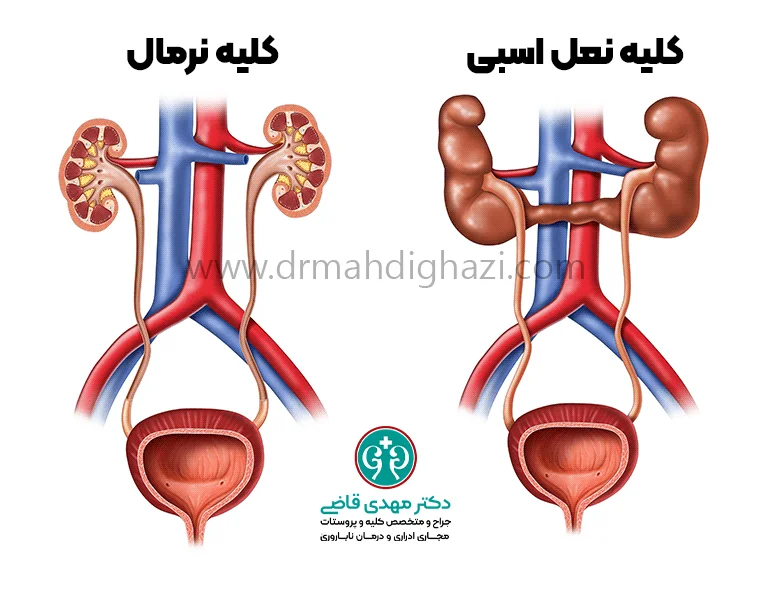
کلیه نعل اسبی ممکن است در عملکرد طبیعی سیستم ادراری اختلال ایجاد کند. در این وضعیت، اتصال دو کلیه ممکن است باعث مشکلات زیر شود:
اختلال در تخلیه ادرار: اتصال دو کلیه ممکن است باعث انسداد جریان ادرار شود که میتواند منجر به تورم کلیهها (هیدرونفروز) شود.
عفونتهای مکرر دستگاه ادراری: اختلال در تخلیه ادرار میتواند باعث تجمع باکتریها و ایجاد عفونتهای مکرر شود.
سنگ کلیه: افراد مبتلا به کلیه نعل اسبی ممکن است به دلیل اختلال در تخلیه ادرار، بیشتر در معرض تشکیل سنگهای کلیه باشند.
علائم کلیه نعل اسبی
حدود 70% از افراد مبتلا به کلیه نعل اسبی در طول زندگی خود علائمی را تجربه میکنند. این علائم میتوانند شامل موارد زیر باشند:
درد شکم
حالت تهوع
سنگ کلیه.
عفونتهای دستگاه ادراری
عوارض کلیه نعل اسبی
کلیه نعل اسبی ممکن است منجر به عوارضی شود که شامل موارد زیر میباشند:
انسداد در محل اتصال کلیه به حالب و تورم کلیه ناشی از انسداد (هیدرونفروز)
این وضعیت باعث تجمع ادرار در کلیهها و تورم آنها میشود.
برگشت ادرار از مثانه (ریفلاکس)
برگشت ادرار به سمت کلیهها میتواند باعث عفونت و آسیب به کلیهها شود.
بیماری کلیه پلی کیستیک
این بیماری ممکن است باعث تشکیل کیستهای متعدد در کلیهها و اختلال در عملکرد آنها شود.
فشار خون بالا با منشاء کلیوی
اختلال در عملکرد کلیهها میتواند باعث افزایش فشار خون شود.
سرطان کلیه و کلیه نعل اسبی
سرطان کلیه در کودکان نادر است، اما احتمال ایجاد تومورهای سرطانی در کلیه نعل اسبی کمی بیشتر از کلیههای طبیعی است. برخی از علائم تومور کلیه عبارتند از:
وجود خون در ادرار (هماچوری): مشاهده خون در ادرار ممکن است نشانه وجود تومور باشد.
توده در شکم: احساس توده یا سفتی در ناحیه شکم ممکن است نشانه تومور کلیه باشد.
درد پهلو (درد در قسمت جانبی کمر): درد در ناحیه پهلو میتواند یکی دیگر از علائم تومور کلیه باشد.
تشخیص کلیه نعل اسبی
پزشکان اغلب در حین درمان سایر بیماریها یا بررسی علت علائم مذکور، متوجه وجود کلیه نعل اسبی میشوند. آزمایشهای تصویربرداری برای تشخیص این وضعیت شامل موارد زیر هستند:
سونوگرافی: سونوگرافی یک روش تصویربرداری بدون درد است که از امواج صوتی برای ایجاد تصویری از کلیهها استفاده میکند. این روش میتواند مشکلاتی مانند هیدرونفروز یا کیستهای کلیه را نشان دهد.
سیستوگرام حین ادرار (VCUG): در این روش تصویربرداری با اشعه ایکس، از یک ماده حاجب برای بررسی مثانه، حالبها (لولههای خروج ادرار از کلیه) و مجرای ادرار استفاده میشود. این روش میتواند برگشت ادرار به کلیهها (ریفلاکس) را نشان دهد.
اسکن هسته ای: در این روش از یک ماده رادیواکتیو تزریق شده برای گرفتن تصویری از کلیهها و بررسی عملکرد آنها استفاده میشود. اسکن هسته ای میتواند اطلاعات دقیقی در مورد عملکرد کلیهها ارائه دهد.
سی تی اسکن (توموگرافی کامپیوتری): سی تی اسکن تصویری دقیق از کلیهها و سایر اندامهای شکم ایجاد میکند. این روش میتواند به تشخیص تومورها، سنگهای کلیه و سایر ناهنجاریها کمک کند.
تصویربرداری رزونانس مغناطیسی (MRI): ام آر آی تصویری دقیق از کلیهها و سایر اندامهای شکم بدون استفاده از اشعه ایکس ایجاد میکند. این روش برای بررسی جزئیات بافتهای نرم و تشخیص تومورها بسیار مفید است.
پزشک همچنین ممکن است برای بررسی عملکرد کلیه آزمایش خون تجویز کند. این آزمایشها میتوانند شامل بررسی سطح کراتینین و نیتروژن اوره خون (BUN) باشند که نشان دهنده عملکرد کلیهها هستند.
درمان کلیه نعل اسبی
در صورت عدم وجود علائم، نیازی به درمان خاصی نیست و بیشتر افراد دارای کلیه نعل اسبی , طول عمر طبیعی دارند. درمان قطعی برای کلیه نعل اسبی وجود ندارد، اما علائم را میتوان با درمانهای حمایتی کنترل کرد. برخی از روشهای درمانی شامل موارد زیر هستند:
کنترل علائم: در صورت بروز علائمی مانند درد، عفونت یا سنگ کلیه، پزشک میتواند جهت درمان این علائم دارو تجویز کند
جراحی: انسداد جریان ادرار و برگشت ادرار از مثانه به سمت بالا (ریفلاکس) در بیماران مبتلا به کلیه نعل اسبی شایع است. هر دوی این مشکلات را میتوان با جراحی برطرف کرد. جراحی ممکن است شامل برداشتن انسداد یا اصلاح مسیر جریان ادرار باشد.
پیشگیری از عفونت: پزشک ممکن است داروهای آنتی بیوتیک تجویز کند تا از عفونتهای مکرر دستگاه ادراری جلوگیری شود.
مراقبتهای لازم در افراد با کلیه نعل اسبی
موقعیت کلیه نعل اسبی نسبت به کلیه طبیعی اغلب پایینتر و بسیار نزدیکتر به جلوی بدن است. این موقعیت غیرعادی باعث میشود که کلیه نعل اسبی بیشتر در معرض آسیبهای خارجی باشد. برای محافظت از این کلیهها، افراد مبتلا باید مراقبتهای ویژه ای را رعایت کنند:
اجتناب از ضربه
استفاده از دستبند هشدار پزشکی به پرسنل اورژانس اطلاع میدهد که باید نسبت به احتمال آسیب کلیه آگاه باشند. کودکان مبتلا به کلیه نعل اسبی بهتر است از ورزشهای پر برخورد (تماسی) اجتناب کنند.
مراجعه منظم به پزشک
افراد مبتلا به کلیه نعل اسبی باید به طور منظم به پزشک مراجعه کنند تا عملکرد کلیهها و هرگونه تغییرات یا عوارض احتمالی بررسی شود.
رژیم غذایی سالم
مصرف یک رژیم غذایی متعادل و کم نمک میتواند به حفظ سلامت کلیهها و کاهش خطر فشار خون بالا کمک کند.
مصرف مایعات کافی
مصرف مایعات کافی برای جلوگیری از تشکیل سنگهای کلیه و حفظ عملکرد مناسب سیستم ادراری بسیار مهم است.
نتیجه گیری
کلیه نعل اسبی یک ناهنجاری مادرزادی نادر است که میتواند منجر به مشکلات مختلفی در سیستم ادراری شود.
تشخیص این وضعیت معمولاً از طریق تصویربرداری صورت میگیرد و درمانهای مختلفی برای کنترل علائم و عوارض آن وجود دارد.
با مراقبتهای مناسب و پیگیریهای منظم پزشکی، افراد مبتلا به کلیه نعل اسبی میتوانند زندگی سالم و طبیعی داشته باشند.
سوالات متداول
کلیه نعل اسبی چیست؟
کلیه نعل اسبی یک ناهنجاری مادرزادی است که در حدود 1 مورد از هر 500 تولد رخ میدهد. در این وضعیت، دو کلیه در ناحیه تحتانی به هم متصل میشوند و شکلی شبیه به نعل اسب پیدا میکنند.
علائم کلیه نعل اسبی چیست؟
حدود ۷۰٪ از افراد مبتلا به کلیه نعل اسبی در طول زندگی خود علائمی را تجربه میکنند که شامل درد شکم، حالت تهوع، سنگ کلیه و عفونتهای دستگاه ادراری میباشد.
عوارض کلیه نعل اسبی چیست؟
کلیه نعل اسبی ممکن است منجر به عوارضی مانند انسداد در محل اتصال کلیه به حالب، تورم کلیه ناشی از انسداد (هیدرونفروز)، برگشت ادرار از مثانه (ریفلاکس)، بیماری کلیه پلی کیستیک و افزایش فشار خون شود.
چگونه کلیه نعل اسبی تشخیص داده میشود؟
تشخیص کلیه نعل اسبی معمولاً با استفاده از سونوگرافی، سی تی اسکن و ام آر آی انجام میشود. این روشها میتوانند اطلاعات دقیقی درباره ساختار و عملکرد کلیهها ارائه دهند.
آیا کلیه نعل اسبی درمان میشود؟
در صورت عدم وجود علائم، نیازی به درمان خاصی نیست و بیشتر افراد دارای کلیه نعل اسبی طول عمر طبیعی دارند. درمان قطعی برای کلیه نعل اسبی وجود ندارد، اما علائم را میتوان با درمانهای حمایتی کنترل کرد.
چه زمانی نیاز به جراحی است؟
اگر انسداد جریان ادرار و برگشت ادرار از مثانه به سمت بالا (ریفلاکس) وجود داشته باشد، مشکلات را میتوان با جراحی برطرف کرد. جراحی ممکن است شامل برداشتن انسداد یا اصلاح مسیر جریان ادرار باشد.
آیا کلیه نعل اسبی بر عملکرد کلیه تأثیر میگذارد؟
بله، کلیه نعل اسبی ممکن است در عملکرد طبیعی سیستم ادراری اختلال ایجاد کند و باعث مشکلاتی مانند اختلال در تخلیه ادرار، عفونتهای مکرر دستگاه ادراری و تشکیل سنگ کلیه شود.
آیا کلیه نعل اسبی وراثتی است؟
این وضعیت بیشتر در دوران رشد جنینی رخ میدهد و ممکن است وراثتی باشد.
کلیه نعل اسبی چگونه بر موقعیت کلیهها تأثیر میگذارد؟
موقعیت کلیه نعل اسبی نسبت به کلیه طبیعی اغلب پایینتر و بسیار نزدیکتر به جلوی بدن است، که باعث میشود بیشتر در معرض آسیبهای خارجی باشد.
چگونه میتوان از عفونتهای مکرر جلوگیری کرد؟
پزشک ممکن است داروهای آنتی بیوتیک تجویز کند تا از عفونتهای مکرر دستگاه ادراری جلوگیری شود.
آیا کلیه نعل اسبی باعث سرطان کلیه میشود؟
سرطان کلیه در کودکان نادر است، اما احتمال ایجاد تومورهای سرطانی در کلیه نعل اسبی کمی بیشتر از کلیههای طبیعی است.
علائم تومور کلیه چیست؟
علائم تومور کلیه ممکن است شامل وجود خون در ادرار، احساس توده یا سفتی در ناحیه شکم و درد در ناحیه پهلو باشد.
اقدامها و مسیرهای مرتبط
پزشکان مرتبط با این موضوع در مشهد
مشاهدهٔ همهٔ پزشکان: بهترین دکتر و متخصص اورولوژی مشهد



دربارهٔ نویسنده

جراح و متخصص اورولوژی
دکتر مهدی قاضی، جراح و متخصص اورولوژی در مشهد. مقالات این سایت زیر نظر پزشکان ساختمان اورولوژی دکتر قاضی نوشته و بازبینی میشوند.
مشاهدهٔ پروفایل و نوبتدهیمطالب مرتبط
همه مطالبپیلونفریت چیست؟ علائم عفونت کلیه، تشخیص و درمان
دکتر مهدی قاضی · ۲۹ اسفند ۱۴۰۴
آتروفی کلیه ( آیا کوچک شدن کلیه باعث مرگ میشود؟)
دکتر مهدی قاضی · ۲۸ اسفند ۱۴۰۴
کلیه پلی کیستیک چیست؟ (در جنین و بزرگسال)
دکتر مهدی قاضی · ۲۸ اسفند ۱۴۰۴
آیا سنگ کلیه میتواند باعث از کار افتادن کلیه شود؟
دکتر مهدی قاضی · ۲۶ اسفند ۱۴۰۴
دیدگاهها
0 دیدگاه
هنوز دیدگاهی ثبت نشده است. اولین نفری باشید که نظر میدهد.